








Reviewed by GLH Team
Introduction
Some games are forever frozen in amber, artifacts of a specific technological moment that can never quite be replicated. The 7th Guest (1993) was exactly that: a CD-ROM showcase, a FMV fever dream, and a puzzle adventure that terrified and frustrated a generation of PC gamers in equal measure. It was clunky, campy, and utterly unforgettable. Now, more than three decades later, Vertigo Games and Exkee have taken a bold swing at bringing Henry Stauf’s haunted mansion back to life.
But here’s the twist: this isn’t a simple texture-upgrade remaster. The 7th Guest Remake is a ground-up reimagining that first debuted as a VR experience in 2023 and has now been ported to traditional flat-screen platforms. The result is a game caught between two worlds: one foot in the nostalgia of the 1990s and the other in modern puzzle-design sensibilities. After spending considerable time exploring every cobwebbed corner of Stauf Manor, we’ve reached a verdict that’s as layered as the mansion itself. So, is this remake a worthy return to one of gaming’s most iconic haunted houses, or should it have stayed buried? Let’s break it down.
Table of Contents
- Quick Verdict Box
- What Is The 7th Guest Remake?
- Gameplay & Mechanics
- Story & Presentation
- Performance & Technical
- Pros and Cons
- How It Compares
- Who Should Buy This?
- THE GLH RATING
- FAQ
- Conclusion
Quick Verdict Box
TL;DR: The 7th Guest Remake is a smart, atmospheric reimagining that modernizes the classic puzzle adventure with clever new mechanics and striking volumetric visuals. The puzzles are generally stronger and more logical than the original, and the Spirit Lantern adds a welcome layer of exploration. However, clunky controls inherited from the VR version, occasional bugs, and a lingering sense that some of the original’s uncanny charm has been lost prevent this from being the definitive return to Stauf Manor.
Buy it if:
- You love escape-room-style puzzle games with atmospheric horror vibes
- You’re a fan of the original and want to see the mansion reimagined as a fully explorable 3D space
- You enjoy narrative-driven mysteries with a campy, theatrical edge
Skip it if:
- Finicky controls and occasional technical hiccups are deal-breakers for you
- You’re expecting the exact same experience or the original’s grainy FMV charm
- You prefer action-packed gameplay over slow, methodical puzzle-solving
What Is The 7th Guest Remake?
| Detail | Information |
|---|---|
| Developer | Vertigo Games, Exkee |
| Publisher | Vertigo Games |
| Genre | Puzzle Adventure / Mystery |
| Platforms | PC (Steam, Epic), PlayStation 5, Xbox Series X|S (Nintendo Switch coming later) |
| Price | $19.99 / £17.99 (with 15% launch discount on some platforms) |
| Release Date | June 4, 2026 |
The 7th Guest Remake is a full reimagining of the 1993 classic, rebuilt using modern technology. It adapts the 2023 VR version for traditional screens, bringing the eerie Stauf Mansion to players without a VR headset. The game casts you as a disembodied spirit drawn to the mansion of the mysterious toymaker Henry Stauf, where six guests once vanished under sinister circumstances. Your job: uncover what happened to them, solve the mansion’s puzzles, and discover the identity of the elusive “seventh guest.”
Gameplay & Mechanics
The Spirit Lantern and Exploration
The most significant addition to the 7th Guest formula is the Spirit Lantern, a tool that lets you reveal hidden clues, restore damaged objects, and glimpse fragments of the past. In practice, this transforms exploration from a simple room-to-room traversal into a detective exercise. Shine your lantern on a faded painting, and it might spring back to life. Illuminate a broken record player, and it might start spinning again, revealing a clue. It’s a clever mechanic that ties the game’s supernatural theme directly into its puzzle design, and we found ourselves constantly scanning rooms for objects that might react to the lantern’s glow.
Puzzle Design: The Heart of the Manor
The puzzles are where The 7th Guest Remake truly shines. The original game was notorious for its absurd, sometimes brutally unfair brain-teasers. This remake has significantly redesigned and replaced many of those puzzles, resulting in a collection that feels more logical, varied, and satisfying to solve. You’ll find yourself rerouting model trains, playing theremins to explode runic vases, and restructuring quilts to recreate the cycle of life. The difficulty curve is generally well-handled, with challenges scaling from approachable to genuinely head-scratching.
That said, not every puzzle lands perfectly. Some drag on longer than necessary, and a few still rely on logic that feels more obscure than clever. There’s also a generous hint system that lets you exchange collectible Stauf coins for puzzle solutions, which is a nice touch for players who hit a wall. However, we did encounter at least one puzzle that felt less like a satisfying challenge and more like trial-and-error luck, which was frustrating in an otherwise thoughtfully designed experience.
Controls: The VR Hangover
This is where the remake stumbles most noticeably. Because the game was originally designed for VR, certain interactions feel awkward with a traditional controller or mouse and keyboard. Rotating objects, examining items from specific angles, and manipulating puzzle elements can occasionally be finicky. The cursor, a skeletal hand that must hover over exactly the right pixel to trigger an interaction, can be maddeningly unresponsive at times. We spent more than a few moments nudging our mouse a millimeter at a time, trying to get the game to register an input.
The irony isn’t lost on us: the original 7th Guest was a point-and-click game, and this remake somehow made the point-and-click elements worse. Free movement around the mansion works well enough, but the moment you need to interact with something specific, you’re pulled back into a clunky interface that feels like a step backward.
Story & Presentation
Narrative: A Sharper Mystery
The story follows the same basic framework as the original: six guests arrive at Henry Stauf’s mansion, lured by the promise of wealth, and never leave. You play as an amnesiac spirit piecing together what happened through ghostly visions and environmental storytelling. The remake does a stronger job of fleshing out both its cast and its central mystery than the 1993 original, giving more weight to the guests and making their individual stories easier to follow.
The narrative is melodramatic and surprisingly campy, which is entirely in keeping with the original’s B-movie horror aesthetic. If you’re expecting genuinely terrifying horror, you might be disappointed; this is more “creepy haunted house attraction” than “visceral nightmare.” But there’s an undeniable charm to the theatrical performances and the gradually unfolding mystery.
Visuals: Volumetric Video and Uncanny Valley
The remake uses volumetric video capture on 3D models to create its live-action sequences, resulting in a distinctive visual effect that’s both impressive and slightly unsettling. The characters appear as holographic presences that you can literally walk around and view from different angles. It’s a clever modernization of the original’s FMV approach, and it lends the game a unique identity.
However, the loss of the original’s grainy, uncanny FMV aesthetic is a double-edged sword. Some players will appreciate the cleaner presentation; others will mourn the strange, off-kilter charm that made the original so memorable. The mansion itself is richly detailed, with atmospheric lighting and environmental effects that maintain a constant sense of unease. But there’s something about the polished, modern visuals that feels slightly less distinctive than the original’s pre-rendered weirdness.
Audio: Atmospheric and Evocative
The sound design deserves special mention. The jazzy soundtrack is perfectly in keeping with the 1920s-era setting, and the ambient audio, creaking floorboards, distant whispers, and the scuttling of unseen things do excellent work building tension. The voice acting is solid, if occasionally hammy, which feels entirely appropriate for the material.
Performance & Technical
Performance is a mixed bag across platforms. On PC, the game handles its transition to modern systems reasonably well, though we did encounter some texture pop-in when entering new rooms. The recommended specs are modest (RTX 2070 / RX 5700 XT), and the game generally runs smoothly on mid-range hardware.
On PlayStation 5, the game runs at a solid frame rate with good visual fidelity. However, the VR-origin issues are most apparent here, with camera positioning sometimes working against the player rather than helping them.
Bugs are present but generally minor. We experienced occasional glitches with object interactions and a few instances where puzzle elements didn’t trigger correctly, requiring a reload. Nothing game-breaking, but enough to be noticeable. The Switch version is scheduled for a later release in 2026, so we can’t speak to its performance yet.
Pros and Cons
Pros
| ✅ | Cleverly redesigned puzzles that are generally more logical and satisfying than the original |
| ✅ | The spirit lantern mechanic adds a meaningful layer to exploration and puzzle-solving |
| ✅ | Rich, atmospheric mansion with detailed environments and effective lighting |
| ✅ | Strong narrative improvements with better-developed characters and a more coherent mystery |
| ✅ | Volumetric video performances create a unique and memorable visual identity |
| ✅ | A generous hint system prevents frustration from spiraling out of control |
Cons
| ❌ | Clunky controls inherited from the VR version, especially with point-and-click interactions |
| ❌ | Loss of the original’s uncanny charm, the remake feels more polished but less distinctive |
| ❌ | Occasional bugs and technical hiccups (texture pop-in, finicky interactions) |
| ❌ | Some puzzles still feel obscure or unintuitive despite the redesigns |
| ❌ | VR-origin design choices don’t always translate well to flat-screen play |
How It Compares
| Game | Price | Playtime | Key Difference |
|---|---|---|---|
| The 7th Guest Remake | $19.99 | 5–7 hours | Modern reimagining with volumetric video and Spirit Lantern mechanics |
| The 7th Guest VR | $19.99 (original) | ~5–7 hours | VR-exclusive experience with motion controls; owners get the remake for free |
| The Room (series) | ~$5–$10 each | 3–5 hours each | Pure puzzle-box gameplay with less narrative focus |
The 7th Guest Remake occupies an interesting space between the escape-room puzzle genre (The Room series) and narrative-driven mysteries. It’s more story-heavy than The Room but more puzzle-focused than traditional adventure games. The $19.99 price point is reasonable for a 5–7 hour experience, especially considering that owners of the VR version receive the remake at no additional cost.
Who Should Buy This?
For puzzle game enthusiasts: If you love escape rooms, brain-teasers, and the satisfaction of a well-earned “aha!” moment, this is an easy recommendation. The puzzles are the strongest part of the package.
For fans of the original: Longtime fans will find plenty to appreciate, from the reimagined mansion to the redesigned puzzles. Just go in knowing that this is a reinterpretation, not a faithful recreation. The campy FMV charm of the original is largely gone.
For horror fans: The atmosphere is creepy and effective, but don’t expect genuine terror. This is more ghost-story campfire than psychological horror.
For casual players: The generous hint system and approachable difficulty curve make this accessible to players who aren’t puzzle-game veterans. However, the control issues might be frustrating for less patient players.
For players sensitive to technical issues: The finicky controls and occasional bugs might be a deal-breaker. If you have a low tolerance for clunky interactions, consider waiting for patches.
THE GLH RATING
Our Take: After spending hours wandering the halls of Stauf Manor, we came away genuinely impressed by the puzzle design and atmospheric world-building, but also frustrated by controls that constantly pulled us out of the experience. The Spirit Lantern is a brilliant addition, and the volumetric video performances give the game a unique identity. But the VR-origin baggage is impossible to ignore, and the loss of the original’s strange, uncanny charm leaves this feeling like a very good remake that never quite becomes a great one. It’s a game we enjoyed despite its flaws, not because of them.
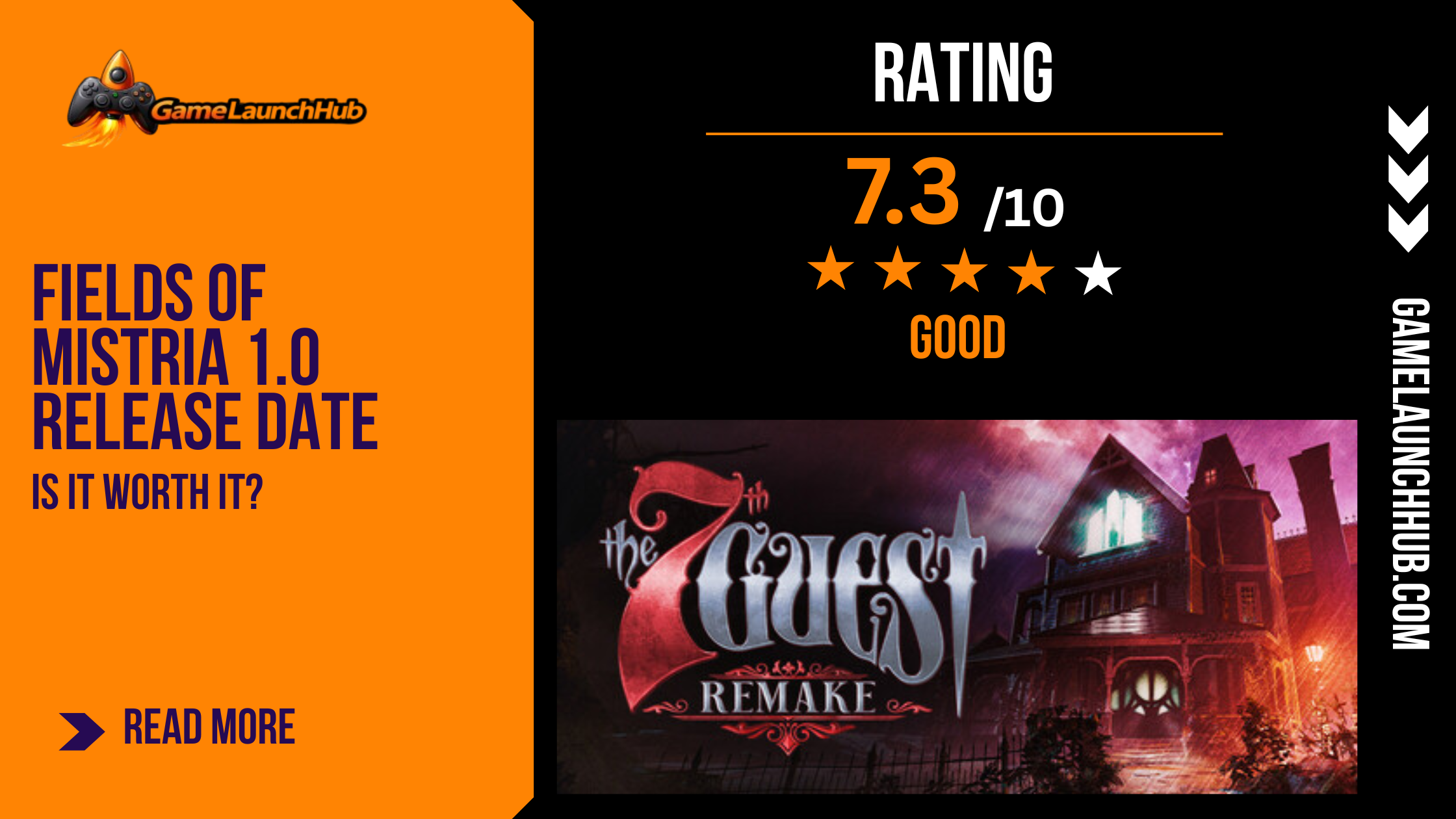
Overall Score: 7.3 / 10
★★★★☆
Verdict: GOOD
| Category | Score |
|---|---|
| Gameplay | 7.5 / 10 |
| Story & Presentation | 7.5 / 10 |
| Performance & Polish | 6.5 / 10 |
| Value for Money | 7.5 / 10 |
| Replayability | 6.0 / 10 |
FAQ
Is The 7th Guest remake worth buying?
Yes, if you enjoy atmospheric puzzle adventures and can tolerate some control jank. The puzzles are strong, the mansion is beautifully realized, and the 5–7 hour runtime feels appropriately paced. However, if finicky controls are a deal-breaker for you, this might be one to skip or wait for patches.
Is The 7th Guest Remake worth it on console?
On PS5 and Xbox Series X|S, the game runs well with solid frame rates and good visual fidelity. However, the control issues are arguably more noticeable with a controller than with a mouse and keyboard. The Switch version is not yet available, so we can’t comment on its performance.
How long does it take to beat The 7th Guest Remake?
Most players will complete the game in 5 to 7 hours, depending on how quickly you solve the puzzles and how much you explore.
Is The 7th Guest Remake worth full price?
At $19.99, we think the price is fair for the 5–7 hour experience, especially given the quality of the puzzle design and presentation. The 15% launch discount makes it an even easier recommendation. Owners of the VR version get the remake for free, which is a generous touch.
Do I need to play the original first?
Not at all. The remake is designed to be accessible to newcomers, with a self-contained story and improved puzzle design that doesn’t require knowledge of the original.
Is The 7th Guest Remake scary?
It’s atmospheric and creepy rather than genuinely terrifying. Think of a haunted house attraction with a campy, theatrical edge rather than visceral horror. There are jump scares, but they’re mild by modern horror standards.
What’s the difference between The 7th Guest Remake and The 7th Guest VR?
The remake is essentially the VR version adapted for flat-screen play, with controls and camera reworked for traditional input methods. The core content, puzzles, story, and mansion layout are largely the same. Owners of the VR version on Steam or PlayStation receive the remake for free.
Conclusion
The 7th Guest Remake is a game of contradictions. It’s a modern reimagining that feels held back by its VR origins. It’s a puzzle game with mostly excellent puzzles and occasionally terrible controls. It’s a gorgeous, atmospheric experience that somehow feels less distinctive than its grainy, 30-year-old predecessor.
And yet, despite all of that, we found ourselves genuinely enjoying the time we spent in Stauf Manor. The puzzles are clever, the Spirit Lantern is a wonderful addition, and the mystery unfolds at a satisfying pace. The game knows exactly what it wants to be, a smartly staged interactive ghost train with brain-teasers at every turn, and it mostly executes that vision with grace.
Is it the definitive way to experience The 7th Guest? For newcomers, absolutely, this is a far more accessible and polished experience than the original. For die-hard fans of the 1993 classic, it’s a respectful and engaging reimagining that will scratch the nostalgia itch, even if it doesn’t quite capture the original’s strange magic.
Our final verdict: GOOD. Not a masterpiece, but a solid, atmospheric puzzle adventure that’s well worth your time if you can look past its technical rough edges.
Final recommendation: Buy it on sale if you’re unsure or at full price if you’re a puzzle-game enthusiast. Just be patient with the controls.
Read More: https://gamelaunchhub.co.uk/7th-guest-remake-horror-review-outbound-cooldown/