






Final Fantasy VII Remake Intergrade: Is It Worth It? Our Honest Verdict
Introduction
Some games are so monumental that a single release can never fully contain them. The original Final Fantasy VII was one such game, a sprawling epic that defined a generation and reshaped the RPG landscape. Its remake was always going to be a daunting task, and the result was a game that split opinion while winning hearts. Final Fantasy VII Remake didn’t just retell a classic story; it reimagined it, expanding a five-hour segment of the original into a 40-hour epic that dared to reinterpret the source material.
Verdict Box
TL;DR: Final Fantasy VII Remake Intergrade is the definitive way to experience one of the most ambitious and divisive RPGs of the modern era. The hybrid combat is a triumph, the presentation is breathtaking, and the Yuffie-focused INTERmission DLC is a must-play addition. However, the padded pacing, linear structure, and controversial story changes mean it won’t win over everyone. For newcomers and returning fans alike, this is the version to play.
Buy it if:
- You are new to Final Fantasy VII and want to experience the beginning of the trilogy
- You loved the original and want to see Midgar brought to life with modern production values
- You appreciate deep, hybrid combat systems that blend action and strategy
Skip it if:
- You are a purist who dislikes the story changes and additions
- You prefer open-world exploration over linear, corridor-based design
- You are looking for a complete story (this is only the first part of a trilogy)
What Is Final Fantasy VII Remake Intergrade?
| Detail | Information |
|---|---|
| Developer | Square Enix Creative Business Unit I |
| Publisher | Square Enix |
| Genre | Action RPG |
| Platforms | PC (Steam), PS5, Xbox Series X|S, Nintendo Switch 2 |
| Price | $69.99 / £59.99 / €69.99 |
| Release Date | June 10, 2021 (PS5); June 17, 2022 (PC); January 22, 2026 (Xbox, Switch 2) |
Final Fantasy VII Remake Intergrade is the enhanced, definitive version of the 2020 remake of the 1997 classic. It includes the full base game, the INTERmission DLC featuring Yuffie Kisaragi in a new side story, and a host of visual and performance upgrades. The story follows Cloud Strife, an ex-SOLDIER operative, as he joins the eco-terrorist group Avalanche in a bombing mission against the Shinra Electric Power Company in the sprawling metropolis of Midgar. This is the first entry in a planned trilogy, covering only the Midgar section of the original game. The game has received widespread acclaim, with an 88 Metascore on PlayStation 5 and Xbox Series X, an 89% positive user rating on Steam, and an 86 Top Critic Average on OpenCritic with a 91% recommendation rate.
Gameplay & Mechanics
Hybrid Combat: The Best of Both Worlds
The combat system in Final Fantasy VII Remake Intergrade is a triumph. It blends real-time action with strategic command-based elements, creating a system that feels both dynamic and tactical. You control a character directly, executing attacks and dodges in real time, while building up an ATB gauge that allows you to pause the action and issue commands like spells, abilities, and items.
What makes this system sing is how it rewards mastery. Simply mashing the attack button will only get you so far; the real depth comes from understanding enemy weaknesses, exploiting stagger mechanics, and switching between party members to maximize efficiency. As one player put it, “The combat was super punchy; all the characters felt great to play as.” The materia system, which lets you slot magical orbs into your weapons and armor, returns with satisfying depth. Leveling up materia and unlocking weapon abilities by using them adds a layer of progression that feels rewarding throughout. Summons also make a spectacular return, with “mind-blowing attacks” that are a visual treat.
The INTERmission DLC: A Worthy Addition
The INTERmission DLC is more than just a bonus; it is a substantial addition that stands as one of the best parts of the entire package. You play as Yuffie Kisaragi, a ninja from Wutai, who is sent to Midgar to steal the ultimate materia from Shinra. The DLC features a streamlined, tighter experience that many have praised as superior to the main game. Gone are the “mediocre sidequesting” and “long-drawn-out fluff dialogues” that occasionally bog down the base game. Instead, you get a focused, action-packed adventure that introduces new combat mechanics, a charming cast of characters, and a fresh perspective on the events of the main story. As one review noted, INTERMISSION is “an absolute must-play for fans of the original and new game alike.”
Pacing and Structure: The Midgar Problem
The most common criticism of Final Fantasy VII Remake is its pacing. The original game’s Midgar section was a short, intense prologue. Here, it is stretched into a 30-40 hour epic. This expansion is both a blessing and a curse. On one hand, it allows for unprecedented character development and world-building. On the other, it introduces “filler” content that can feel tedious. As one player noted, “Pacing is easily the weakest aspect of this game.” The game’s linear structure, with its narrow corridors and repetitive side quests, can also wear thin. One critic described the game as “torn between homage and reinvention” but noted it “stumbles in its pacing, narrative filler, and technical choices that are now showing their age.”
Story & Presentation
Narrative: Homage, Reinvention, and Controversy
The story of Final Fantasy VII Remake is simultaneously a faithful retelling and a radical reinterpretation. The core beats are familiar: Cloud joins Avalanche, bombs a reactor, and becomes entangled in a conflict with the Shinra corporation. But the game introduces new elements, including a group of ghostly entities called the Whispers, which are heavily implied to be agents of fate ensuring that the story follows its original path.
This meta-narrative has been deeply divisive. Some players appreciate the boldness, seeing it as a way for the developers to subvert expectations and explore themes of destiny and free will. Others view it as a betrayal of the original story. One Steam reviewer described the “low points” of the story as “the worst in the history of gaming.” A Metacritic user lamented the “story changes” and “those stupid force ghosts.” However, the game’s defenders argue that this reimagining is what makes the project so compelling. As one review put it, Final Fantasy VII Remake is “a deeply ambitious work” that is “torn between homage and reinvention.”
Visuals: A Feast for the Eyes
Regardless of how you feel about the story, there is no denying the game’s visual splendor. Intergrade pushes the boundaries of what is possible with Unreal Engine 4, delivering breathtaking character models, detailed environments, and cinematic cutscenes that rival blockbuster films. The game’s art direction is top-notch, with “presentation, character design, graphics, music, and art direction” all described as 10/10. The world of Midgar feels alive, with a “sense of life in the quarter” that is genuinely impressive. The visual upgrades in Intergrade, including improved textures, lighting, and background environments, make this the best-looking version of the game available.
Audio: A Masterclass in Sound
The audio design is equally exceptional. The soundtrack, composed by Nobuo Uematsu with new arrangements by a team of Square Enix composers, is a masterclass in blending nostalgia with innovation. The music is “better than anything we’ve got from Square Enix since FFX.” The voice acting is also top-tier, with the cast delivering performances that capture the essence of these beloved characters.
Performance & Technical
Final Fantasy VII Remake Intergrade runs well on all platforms, but there are some caveats. On PS5 and Xbox Series X|S, the game offers two graphical modes: a Quality mode targeting 4K at 30 fps and a Performance mode aiming for a smooth 60 fps. The game is a showcase for the hardware, delivering “sharper visuals” and “significantly shorter loading times.” The Xbox Series X version has been praised as “one of the most polished versions of the game.”
The PC version is a mixed bag. While it offers the potential for superior visuals and performance on high-end hardware, it has been plagued by stuttering issues. Shader compilation and traversal stutter are common complaints, and the game lacks DLSS or FSR support as of 2026. Community mods and workarounds exist to mitigate these issues, but out of the box, the PC version is not as polished as its console counterparts.
The Nintendo Switch 2 version, released in January 2026, is a surprisingly ambitious conversion that “brings one of the most spectacular JRPGs of recent years to the Nintendo platform without betraying its identity.” However, it is the least visually impressive version, with a 30fps target and some compromises.
Pros and Cons
Pros
| ✅ | Hybrid combat system that blends action and strategy beautifully |
| ✅ | Stunning visuals with incredible character models and art direction |
| ✅ | INTERmission DLC is a substantial, excellent addition featuring Yuffie. |
| ✅ | Exceptional soundtrack that honors the original while adding new depth |
| ✅ | Voice acting and character performances are top-notch. |
| ✅ | Quality-of-life improvements over the PS4 version |
Cons
| ❌ | Padded pacing with filler content that drags the experience |
| ❌ | Linear, corridor-based level design that can feel restrictive |
| ❌ | Controversial story changes that may alienate purists |
| ❌ | PC performance issues, including shader compilation stutter |
| ❌ | Not a complete story, this is only the first part of a trilogy |
How It Compares
| Game | Price | Playtime | Key Feature |
|---|---|---|---|
| Final Fantasy VII Remake Intergrade | $69.99 | 35-45 hours | Hybrid combat; stunning visuals; Yuffie DLC included |
| Final Fantasy VII Rebirth | $69.99 | 50-70 hours | Open-world sequel; expands the story beyond Midgar |
| Final Fantasy XVI | $69.99 | 40-50 hours | Action-focused combat; darker tone; standalone story |
Final Fantasy VII Remake Intergrade is a more focused, linear experience than its sequel, Rebirth, which expands into a more open-world structure. Compared to Final Fantasy XVI, it retains more traditional RPG elements, including the materia system and party-based combat. For newcomers to the series, Intergrade is the best starting point, as it lays the foundation for the entire Remake trilogy.
Who Should Buy This?
For newcomers to Final Fantasy VII: This is the definitive starting point. Intergrade offers the most polished version of the first chapter of the Remake trilogy, with stunning visuals and deep, engaging combat.
For fans of the original: If you are curious to see how Midgar has been reimagined, Intergrade is a must-play. The game is a labor of love that expands the world and characters in ways that will surprise and delight you, if you can accept the changes.
For players who love deep combat systems: The hybrid combat is one of the best in the genre, rewarding mastery and experimentation.
For players who dislike linear, corridor-based games: The game is largely linear, with limited exploration. If you prefer open worlds, you may find it restrictive.
For players who are sensitive to performance issues on PC: The PC version has stuttering problems. Consider playing on console or waiting for further patches.
THE GLH RATING
Our Take: After spending hours exploring every corner of Midgar, we came away with a profound respect for what Square Enix has achieved, and a clear understanding of its limitations. Final Fantasy VII Remake Intergrade is a bold, ambitious reimagining that delivers one of the most spectacular action RPG experiences of the modern era. The combat is a triumph, the presentation is breathtaking, and the INTERmission DLC is a must-play addition that stands as one of the best parts of the entire package. But the game is also padded, linear, and deeply divisive in its narrative choices. It is not the Final Fantasy VII you remember; it is something new, something that challenges your expectations and refuses to play it safe. For those willing to embrace the changes, it is a masterpiece. For those who cannot, it will always be a disappointment.
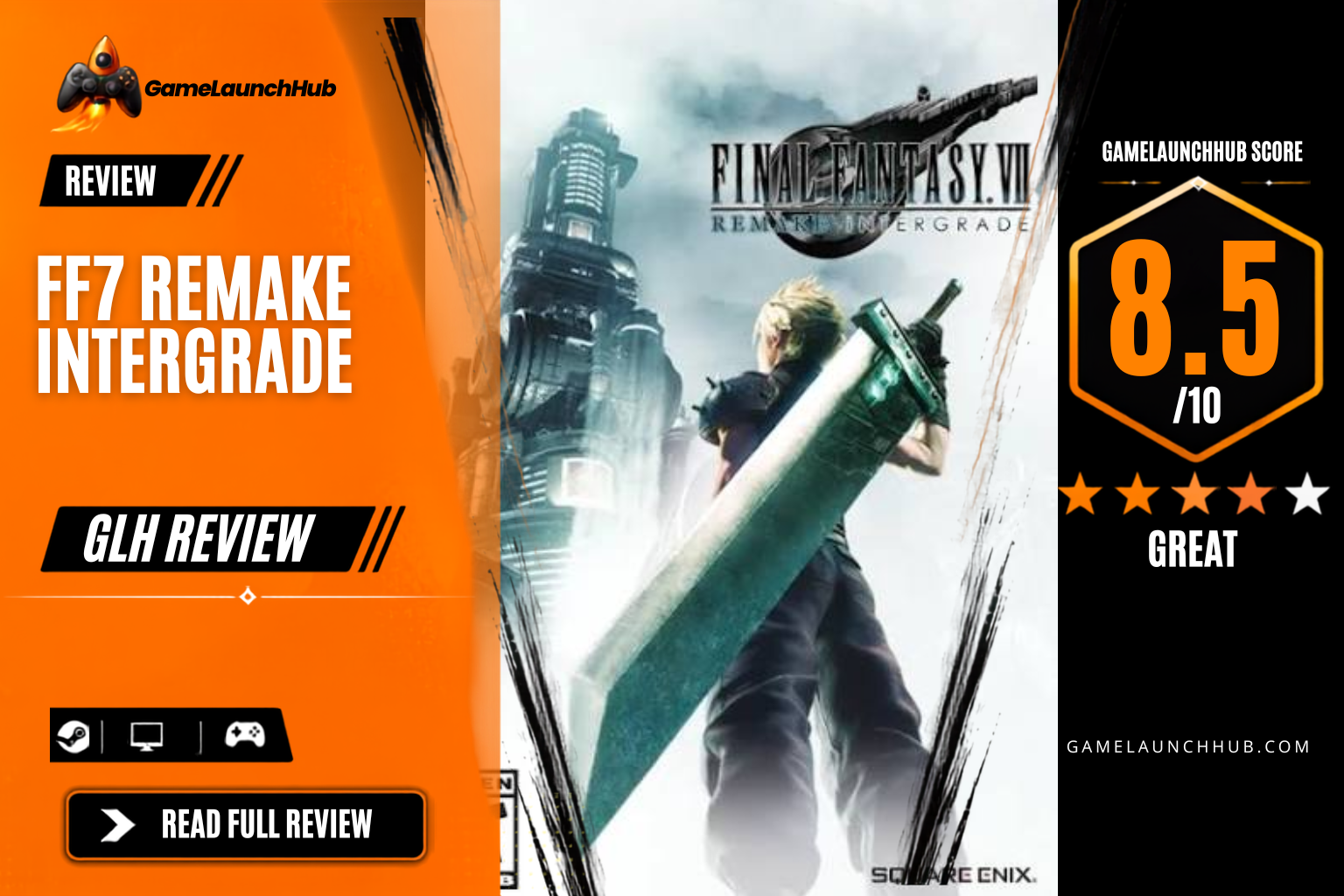
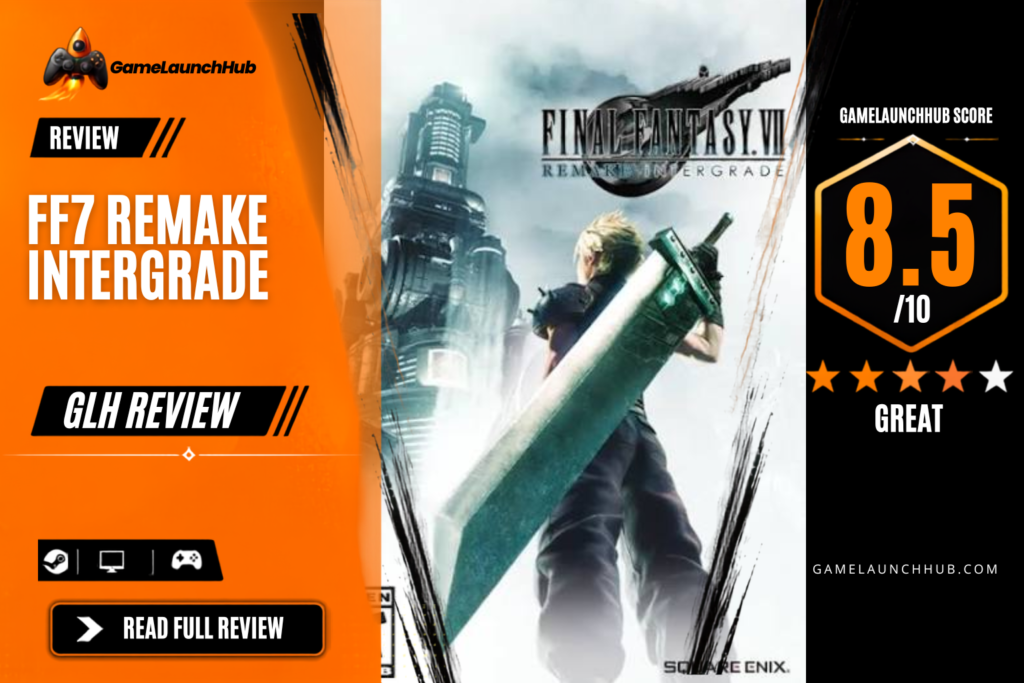
Overall Score: 8.5 / 10
★★★★☆
Verdict: GREAT
| Category | Score |
|---|---|
| Gameplay | 9.0 / 10 |
| Story & Presentation | 8.0 / 10 |
| Performance & Polish | 8.0 / 10 |
| Value for Money | 8.0 / 10 |
| Replayability | 7.0 / 10 |
FAQ
Is the Final Fantasy VII Remake Intergrade worth buying?
Yes, if you are interested in the Final Fantasy VII Remake trilogy. It is the definitive version of the first chapter, with stunning visuals, deep combat, and the excellent INTERmission DLC. It has an 88 Metascore on PS5 and Xbox, an 86 Top Critic Average on OpenCritic, and “Very Positive” reviews on Steam. However, if you are a purist who dislikes the story changes, you may want to think twice.
Is Final Fantasy VII Remake Intergrade worth it on Switch 2?
The Switch 2 version is a surprisingly ambitious conversion that successfully brings the game to Nintendo’s handheld hybrid. However, it targets 30fps with some visual compromises. If portability is your priority, it is a solid option. For the best experience, play on PS5, Xbox Series X|S, or a high-end PC.
How long to beat Final Fantasy VII Remake Intergrade?
The main story takes around 35-40 hours. With the INTERmission DLC and side content, you can expect 40-50 hours.
Is the Final Fantasy VII Remake Intergrade worth full price?
At $69.99, the game offers a substantial experience with 35-50 hours of content. The production values are among the highest in the industry, and the inclusion of the INTERmission DLC adds significant value. If you are unsure, consider waiting for a sale.
Is Final Fantasy VII Remake Intergrade a complete game?
No. It is the first part of a trilogy, covering only the Midgar section of the original game. The story continues in Final Fantasy VII Rebirth, with a third installment yet to be released.
Does Final Fantasy VII Remake Intergrade have performance issues on PC?
Yes. The PC version has been plagued by shader compilation and traversal stutter. Community mods and workarounds exist, but out of the box, it is not as polished as the console versions.
Is the INTERmission DLC worth playing?
Absolutely. The Yuffie-focused DLC is a substantial addition that offers a fresh perspective on the events of the main game. It has been praised for its tighter pacing and engaging combat mechanics.
Conclusion
Final Fantasy VII Remake Intergrade is a game that dares to be different. It takes a beloved classic and reimagines it for a new generation, expanding its scope, deepening its characters, and challenging its own legacy. The combat is a triumph, the presentation is breathtaking, and the INTERmission DLC is a must-play addition. But the game is also padded, linear, and deeply divisive in its narrative choices. It is not the Final Fantasy VII you remember; it is something new, something that demands you engage with it on its own terms.
For newcomers, this is the definitive starting point, a spectacular introduction to one of the most ambitious RPG projects ever attempted. For returning fans, it is a bold reimagining that will test your attachment to the original. For those willing to embrace the changes, it is a masterpiece. For those who cannot, it will always be a disappointment.
Final recommendation: Buy it if you are ready to experience a bold reimagining of a classic. It is a spectacular game, but it is not for everyone.
Read Also: High on Life 2 Review: Chaotic Comedy FPS