







Dear Me, I Was…: Is It Worth It? Our Honest Verdict
Introduction
Some games demand your attention with explosions and spectacle. Others whisper, inviting you to sit quietly and simply feel. Dear me, I was… am firmly in the latter camp. This is an interactive experience that trades text, dialogue, and traditional gameplay for something far more intimate: a wordless, watercolor journey through a woman’s entire life.
Developed by Arc System Works, the studio better known for high-octane fighters like Guilty Gear and Dragon Ball FighterZ, this is a startling departure from their usual fare. Originally released as a Nintendo Switch 2 exclusive in July 2025, it expanded to PC, Nintendo Switch, iOS, and Android on February 12, 2026. Directed by Maho Taguchi with art direction by Taisuke Kanasaki, known for his work on Hotel Dusk: Room 215 and Another Code, the game is a short, poignant meditation on life, love, loss, and the passage of time. We have spent time with this quiet masterpiece, and we are ready to deliver our verdict. So, after all that, we have to ask: Dear me, was I worth your time and credits? Let’s break it down.
Quick Verdict Box
TL;DR: Dear Me, I Was… is a breathtakingly beautiful, wordless interactive experience that chronicles a woman’s life through watercolor art and music. Its unique presentation and emotional depth are genuinely moving, but its extremely short runtime (under an hour) and minimal interactivity may leave some wanting more. It is a game that prioritizes art and emotion over traditional gameplay.
Buy it if:
- You appreciate games as art and enjoy emotional, contemplative experiences
- You love beautiful watercolour visuals and evocative soundtracks
- You are looking for a short, impactful experience you can finish in one sitting
Skip it if:
- You prefer traditional gameplay with complex mechanics and challenges
- You find the idea of a textless, largely passive narrative frustrating or unengaging
- You are looking for a longer experience with high replay value
What is dear me, I was…?
| Detail | Information |
|---|---|
| Developer | Arc System Works |
| Publisher | Arc System Works |
| Genre | Interactive Adventure / Visual Novel |
| Platforms | PC (Steam), Nintendo Switch 2, iOS, Android |
| Price | $7.99 / €7.99 / £6.99 |
| Release Date | July 31, 2025 (Switch 2); February 12, 2026 (Other Platforms) |
Dear Me, I was… is a short, wordless interactive adventure that follows the life of an unnamed woman from childhood to old age. Created by the team at Arc System Works, it combines watercolor art and rotoscoping techniques to tell a deeply personal story without a single line of text. The game is designed to be completed in a single sitting of 40 to 60 minutes. With a Metascore of 76 and “Very Positive” user reviews on Steam, it has resonated with many players, even if its niche appeal is not for everyone.
Gameplay & Mechanics
A Gentle Touch of Interactivity
Calling “dear me,” I was… a “game” requires some qualification. It is interactive, but gently so. There are no complex mechanics, no fail states, and no branching paths. Instead, you guide the pacing of scenes by performing simple actions: dragging a pencil across a blank sketchbook page to reveal a drawing, choosing breakfast order, or tapping to embrace a loved one. These interactions are minimal but meaningful. They serve to ground you in the protagonist’s world, making you an active participant in her quiet moments rather than a passive observer. As one review noted, “the minor interactions don’t add much to the experience,” but they do create a sense of presence and involvement that a purely passive film would lack.
A Textless Narrative
The most striking design choice is the complete absence of text. There is no dialogue, no narration, no written words at all. The story is conveyed entirely through visuals and music. This forces the player into a state of active observation and interpretation. You don’t read her story; you interpret it, and that interpretation becomes deeply personal. This approach is both the game’s greatest strength and its most significant risk. Without text, some narrative details can be ambiguous or hard to follow. However, the game’s defenders argue that this ambiguity is intentional, allowing each player to bring their own experiences and emotions to the story.
Short and Sweet
The game lasts approximately 45 to 60 minutes. This brevity is a deliberate choice, it is designed to be played in a single sitting, like a short film. It respects the player’s time while delivering a complete, emotionally cohesive narrative. However, this short runtime, combined with the limitations of the text-free format, can make it difficult to form a deep attachment to the characters.
Story & Presentation
A Wordless Life
The story follows an unnamed woman from her early childhood through adulthood and into her later years. The narrative jumps between pivotal moments in her life, capturing snapshot moments of joy and sorrow as she develops connections with the world and people around her. It depicts her lifelong journey as an artist and the way her relationship with this creative medium evolves over time. The story is simple and grounded, devoid of major twists or melodrama. The protagonist’s life is one that the average player can likely relate to on some level, and that makes her struggles, discoveries, and experiences all the more resonant. As one review put it, “The story tackles themes of loss and self-doubt with an impressive degree of realism and restraint.”
Visuals: A Watercolour Masterpiece
Visually, dear me, it was… breathtaking. Art director Taisuke Kanasaki brings his distinctive sketch-line technique, blending it with soft watercolor textures that ripple across the screen like a living canvas. The game’s visual identity evokes shades of Cing classics like Hotel Dusk and the Another Code series. Tonal shifts in the story are accompanied by movement between vibrant full-color, cooler blue-and-grey, and black-and-white palettes, a clever way of visually expressing the protagonist’s emotional state. Characters display an impressive degree of fluid movements and nuanced expressions thanks to the use of rotoscoping on a live-action cast. As one review noted, “The strengths of Dear Me, I Was come down to its excellent use of visuals.”
Audio: The Heartbeat of the Story
If the visuals form the body of Dear me, I was…, the soundtrack is its heartbeat. The theme song anchors the emotional arc, swelling during moments of hope and softening during introspection. Ambient sounds, rain against windows, distant city noise, footsteps on wooden floors, create texture and immersion. Without dialogue to guide you, music becomes narrative scaffolding, shaping your mood and carrying emotional weight when images alone might feel ambiguous. Few games rely so heavilym and successfullym on score as a storytelling device.
Performance & Technical
The game runs smoothly on all platforms. On Nintendo Switch 2, it features a 2.265 GB download size. On PC, the system requirements are modest: a 64-bit processor, an Intel Core i5-4690, 2 GB RAM, and a GeForce GTX 1050 Ti. One minor issue reported is that the control scheme can be slightly frustrating when playing docked. However, the game supports multiple control options, including button controls, touch controls, and the Switch 2’s unique features. The game received a free update alongside its multiplatform release, adding new illustrations available in the Gallery Mode.
Pros and Cons
Pros
| ✅ | Breathtaking watercolour visuals that are genuinely works of art |
| ✅ | Emotionally resonant storytelling that tackles themes of loss, self-doubt, and growth with restraint |
| ✅ | Beautiful soundtrack that carries the emotional weight of the narrative |
| ✅ | Wordless, text-free presentation that is bold, unique, and invites personal interpretation |
| ✅ | Short, accessible experience (under an hour) that respects your time |
| ✅ | Affordable price point at $7.99 |
Cons
| ❌ | Extremely short runtime (under an hour) that may leave some wanting more |
| ❌ | Minimal interactivity that may feel more like a film than a game |
| ❌ | Text-free narrative can be ambiguous and hard to follow at times |
| ❌ | Limited replay value due to the linear, single-sitting structure |
| ❌ | May not appeal to players looking for traditional gameplay mechanics |
How It Compares
| Game | Price | Playtime | Key Feature |
|---|---|---|---|
| Dear me, I was… | $7.99 | ~1 hour | Wordless watercolour narrative; minimal interactivity |
| GRIS | $16.99 | 3-4 hours | Watercolour art, emotional journey, light platforming |
| Unpacking | $19.99 | 3-4 hours | Story told through gameplay; no dialogue; meditative |
Dear Me, I was… is a more focused and shorter experience than GRIS or Unpacking. While GRIS uses watercolor art to tell a story of grief through light platforming, Dear Me, it is almost entirely passive, relying on observation and interpretation. Compared to Unpacking, which tells a story through the act of unpacking boxes, Dear Me, I was… is even more stripped back, with only the most minimal interactivity. At $7.99, it is significantly cheaper than both, making it an accessible entry point for those curious about artistic, narrative-driven experiences.
Who Should Buy This?
For players who appreciate games as art: If you believe video games can be a medium for emotional expression and artistic beauty, this is an essential experience. It has been called a “masterpiece that transcends the traditional limitations of a video game to become pure art.”
For fans of emotional, contemplative experiences: If you enjoyed GRIS, Journey, or Unpacking, you will find a kindred spirit in Dear me, I was… It is a game that invites reflection and emotional connection.
For players looking for a short, impactful experience: At under an hour, this is perfect for a quiet evening. It respects your time and delivers a complete, emotionally resonant narrative in a single sitting.
For players who prefer traditional gameplay: This is not a game in the conventional sense. There are no challenges, no mechanics to master, and no fail states. If you are looking for gameplay, this is not for you.
For players who value replayability: The game is linear and unchanging. While you may revisit it to experience the art and music again, there is no branching narrative or hidden content to discover.
THE GLH RATING
Our Take: After spending an hour with this quiet, beautiful experience, we came away moved and contemplative. Dear Me, It was not a game in the traditional sense, it was an interactive work of art, a wordless meditation on life, love, and the passage of time. Its watercolor visuals are breathtaking, its soundtrack is hauntingly beautiful, and its wordless narrative is a bold and largely successful experiment. But its extremely short runtime and minimal interactivity mean it will not appeal to everyone. It is a game that asks you to sit still, to observe, and to feel. For those willing to do so, it is an unforgettable experience.
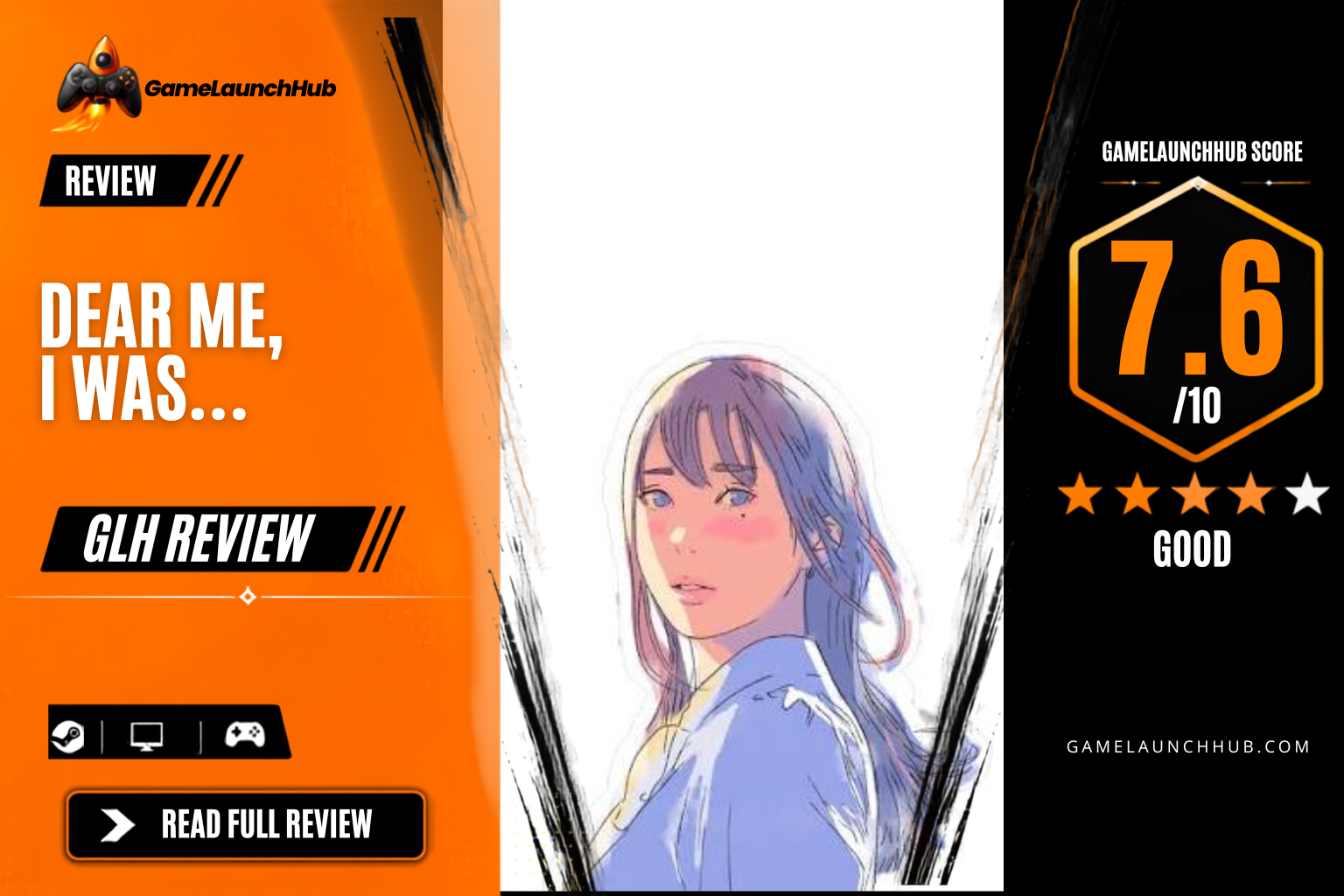
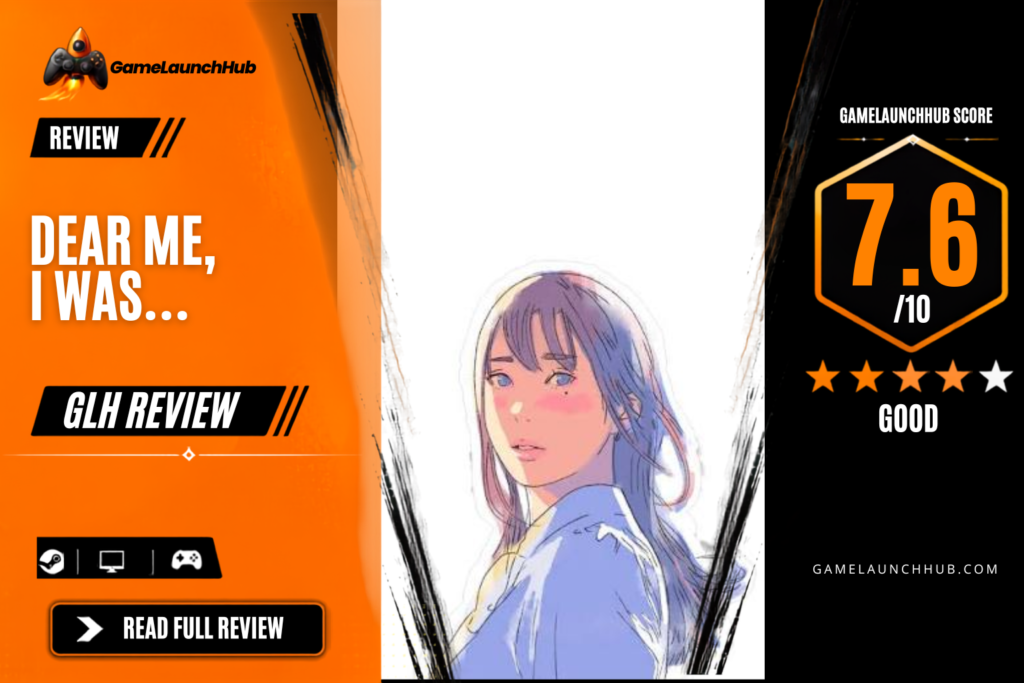
Overall Score: 7.6 / 10
★★★★☆
Verdict: GOOD
| Category | Score |
|---|---|
| Gameplay | 5.0 / 10 |
| Story & Presentation | 9.0 / 10 |
| Performance & Polish | 8.5 / 10 |
| Value for Money | 8.0 / 10 |
| Replayability | 4.0 / 10 |
FAQ
Dear me, was I… worth buying?
Yes, if you appreciate artistic, emotionally resonant experiences and are willing to embrace a game that prioritizes visuals and music over traditional gameplay. The game has a 76 Metascore and “Very Positive” reviews on Steam. At $7.99, it is an accessible investment for a unique experience.
Dear me, was I… worth it on mobile?
Yes. The game is available on iOS and Android, making it perfect for a quiet commute or a reflective moment on the go. The touch controls are intuitive and well-suited to the game’s gentle interactivity.
How long to beat Dear me, I was…?
The game takes approximately 45 to 60 minutes to complete. It is designed to be finished in a single sitting.
Dear me, I was… worth full price?
At $7.99, the game is priced appropriately for its length and scope. It is a short but impactful experience that offers good value for those who appreciate its artistic ambitions.
Dear me, was I… a game?
That depends on your definition. It is an interactive experience with minimal gameplay elements. Some have called it “interactive art” rather than a traditional game.
Dear me, I was… have text or dialogue?
No. The game is completely textless. The story is told entirely through visuals and music. This is one of its most distinctive and polarizing features.
Who is the developer of Dear me, I was…?
The game was developed and published by Arc System Works, the studio known for the Guilty Gear and Dragon Ball FighterZ series. It was directed by Maho Taguchi with art direction by Taisuke Kanasaki, known for Hotel Dusk: Room 215 and Another Code.
Conclusion
Dear Me, It was… is a quiet, beautiful, and deeply moving experience that proves video games can be a medium for art and emotional expression. Its watercolor visuals are breathtaking, its soundtrack is haunting, and its wordless narrative is a bold experiment that largely succeeds. It is a game that asks you to sit still, to observe, and to feel. But it is also a game that will not appeal to everyone. Its extremely short runtime and minimal interactivity mean it is more of an interactive film than a traditional game. If you are looking for complex mechanics, challenges, or deep gameplay, this is not for you. If you are looking for a reflective, emotional experience that will stay with you long after the credits roll, Dear Me, I Was… is a gem. It is a game that whispers, and in a world full of noise, that whisper is worth hearing.
Final recommendation: Buy it if you appreciate games as art and are looking for a short, emotional experience. It is a quiet masterpiece.
Read More: Marvel Tokon: Fighting Souls Review: A Stylish Triumph
One response to “Dear me, I was… Review: A Quiet Artistic Masterpiece”
[…] Dear me, I was… Review: A Quiet Artistic MasterpieceAugust 21, 2026 […]