







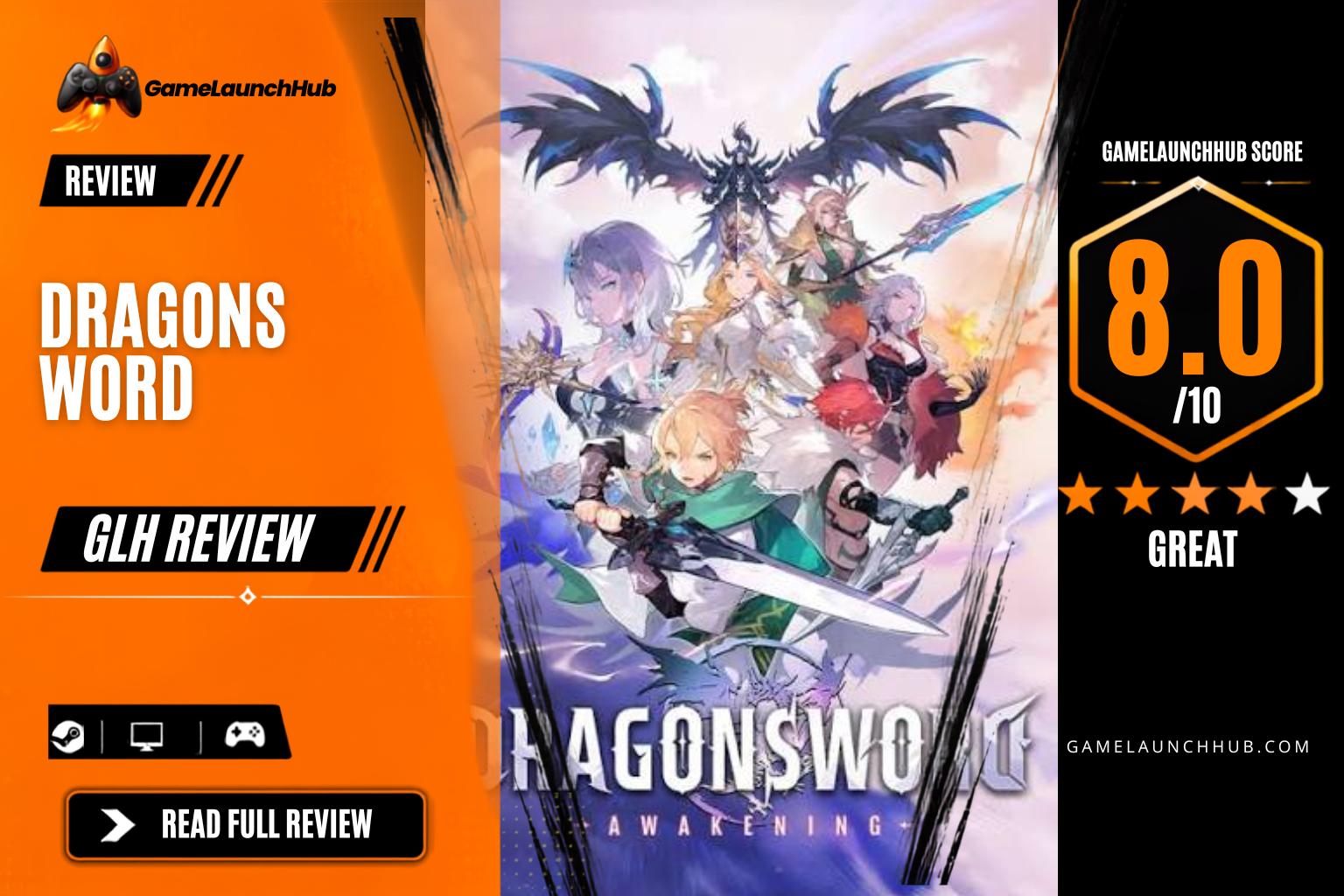

DragonSword (KR): Is It Worth It? Our Honest Verdict
Introduction
The story of DragonSword is almost as compelling as the game itself. It began as a Korean free-to-play mobile open-world RPG, launched in January 2026, that was quickly caught in a storm of controversy involving its publisher Webzen. Legal battles, withheld payments, and a nearly derailed launch threatened to bury the game before it could truly find its audience. But the developers at Hound13, the studio behind Dragon Nest and Hundred Soul, refused to let their five-year labor of love die.
Instead, they performed a remarkable pivot. They stripped out the gacha mechanics, removed the microtransactions, and retooled the entire experience into a premium single-player package that they could release on their own terms. The result is DragonSword: Awakening, a $30 open-world action RPG that launched on Steam on July 23, 2026. It has since sold over 300,000 copies, hitting a 92% positive rating and becoming one of the year’s biggest indie success stories. We have spent countless hours exploring the continent of Orbis, unleashing flashy tag-team combos, and uncovering the truth behind its troubled development. So, after all that, we have to ask: is DragonSword worth your time and credits? Let’s break it down.
Quick Verdict Box
TL;DR: DragonSword is a gorgeous, combat-focused open-world RPG that delivers the Genshin Impact experience without the predatory gacha mechanics. The tag-team combat is fluid and satisfying, the world is vibrant and expansive, and the price is hard to beat. However, its mobile-game origins show through in the repetitive grind, rigid progression, and a combat system that plateaus too early. It is a great game with real heart, but it is not without its rough edges.
Buy it if:
- You want a Genshin Impact-style open-world RPG without the gacha monetization.
- You love fast-paced, flashy tag-team combat with satisfying combos
- You appreciate a complete single-player experience with no microtransactions
Skip it if:
- You are tired of repetitive dungeon grinding and material farming
- You expect a combat system that evolves significantly over 30 hours
- You are looking for a polished, AAA-level experience without any rough edges
What Is DragonSword?
| Detail | Information |
|---|---|
| Developer | Hound13 |
| Publisher | Hound13 (Self-published for global release) |
| Genre | Open-World Action RPG |
| Platforms | PC (Steam), Mobile (iOS/Android, Korean version only) |
| Price | $29.99 / €29.99 / ₩? (Steam) |
| Release Date | January 21, 2026 (Korean mobile/PC); July 23, 2026 (Global Steam) |
DragonSword is an open-world action RPG set in the continent of Orbis. You play as Lute, a young mercenary who joins a colorful band of adventurers and is swept into an ancient conflict that could determine the fate of the world. The game features a tag-team combat system where you control a party of three characters, switching between them mid-combo to unleash devastating chain attacks. It is developed by Hound13, the studio behind Dragon Nest and Hundred Soul, and is powered by Unreal Engine 5. The global Steam release is a buy-to-play single-player package with co-op capabilities and no microtransactions. A free demo was available during the June 2026 Steam Next Fest.
Gameplay & Mechanics
The Tag-Team Combat: Fluid, Flashy, and Fun
The heart of DragonSword is its tag-team combat system, and it is genuinely a blast. You control a party of three characters, each with their own unique skills and playstyles. The core loop involves mixing basic attacks and character skills, then switching to another character at the right moment to continue the combo. Time these swaps correctly, and you will unleash flashy, high-damage QTE sequences that feel incredibly satisfying.
The combat is intuitive and easy to pick up, but there is real depth in learning the timing and synergy between your party members. As one reviewer put it, “The real depth comes from timing those co-op swap skills to unleash flashy combo attacks, which you’ll definitely need because the bosses will straight-up kick your ass if you aren’t careful.” The game features 19 playable characters at launch, all of which can be unlocked simply by playing through the story.
The World of Orbis: Big, Bright, and Begging to Be Explored
The continent of Orbis is a sprawling open world brought to life with Unreal Engine 5’s vibrant, anime-inspired visuals. It is filled with dungeons, fortresses, puzzles, and secrets. The game wears its influences on its sleeve, you will find clear echoes of Genshin Impact and The Legend of Zelda: Breath of the Wild in its design. There are windmills that serve as fast-travel points, puzzles that unlock new areas, and dungeons that offer valuable rewards.
The “Partner Beast” mount system is a standout feature. These creatures allow you to run faster, climb walls, glide, swim, and dive, making exploration a joy. You can summon them almost anywhere, and each one offers a unique ability, such as an in-air speed boost or faster climbing speed. The world is designed to be explored, and the game rewards curiosity with new characters, gear, and story revelations.
The Mobile-Game Hangover: Grind and Repetition
Here is where the game’s origins show. DragonSword was originally a live-service mobile game, and that DNA is impossible to ignore. Progression is rigid and grindy. You will frequently hit level caps that require you to complete specific “mercenary rank” quests to unlock the next tier. You will need to farm the same dungeons repeatedly for materials to level up your gear.
As one reviewer noted, “The game constantly forces you to grind repetitive dungeons and farm specific materials just to break through level caps, which feels like an afterthought for a single-player RPG.” The combat also plateaus. You are “stuck with the same basic move sets from early on, so combat doesn’t evolve as much as you might hope.”
Story & Presentation
Narrative: A Classic Fantasy with Heart
The story follows Lute, a young man who joins a mercenary group led by the boisterous Johnny and the axe-wielding elf Castellia. What begins as a simple quest to climb the mercenary ranks soon spirals into an ancient conflict that could determine the fate of the world.
The narrative has been described as “classic fantasy,” with a tone that balances “lightness and weight.” It is not groundbreaking, but it is engaging. The main trio of Lute, Johnny, and Castellia makes for a “really fun cast,” and the game features a fully dubbed main story by Korean voice actors. As one review put it, the story has “fun, interesting” moments that will keep you invested.
Visuals: Unreal Engine 5 Anime Beauty
Visually, DragonSword is a treat. The Unreal Engine 5-powered anime art style is gorgeous, with bright, warm colors and detailed character models. The world is lush and vibrant, and the flashy combat effects are a feast for the eyes. As one critic put it, the game is “a gorgeous anime game” that feels like Genshin Impact without the “microtransaction garbage.”
Audio: Solid Korean Voice Acting
The game features solid Korean voice acting that brings the characters to life. The soundtrack is fitting for an epic fantasy adventure, though it does not quite reach the heights of the genre’s best.
Performance & Technical
On PC, DragonSword runs smoothly on modern hardware, though some users have reported occasional glitches, particularly in co-op mode. The game is also available on mobile in Korea, but the global Steam release is the definitive version. The game has received regular updates since launch, with the developers adding new content and addressing player feedback. Console versions for PlayStation and Nintendo platforms are currently in development.
One notable point of contention is the use of AI. Hound13 has stated that AI was used for translating some in-game dialogue, but no AI was used to create any in-game content resources
Pros and Cons
Pros
| ✅ | No gacha, no microtransactions, all 19 characters unlockable through gameplay |
| ✅ | Fluid, flashy tag-team combat with satisfying QTE combos |
| ✅ | Gorgeous Unreal Engine 5 visuals with a vibrant anime art style |
| ✅ | Expansive open world with rewarding exploration and a great mount system |
| ✅ | Excellent value at $29.99 for a complete 30+ hour RPG |
| ✅ | Strong Korean voice acting and an engaging classic fantasy story |
Cons
| ❌ | Repetitive grinding and material farming that feels like a mobile-game hangover |
| ❌ | Combat plateaus early with limited move-set evolution |
| ❌ | Rigid progression with level caps and mandatory rank-up quests |
| ❌ | Occasional bugs and glitches, especially in co-op |
| ❌ | Clearly wears its influences on its sleeve, lacking a fully unique identity |
How It Compares
| Game | Price | Key Features | Monetisation |
|---|---|---|---|
| DragonSword: Awakening | $29.99 | Tag-team combat; 19 characters; open-world exploration | None (buy-to-play) |
| Genshin Impact | Free | Open-world; 117+ characters; elemental combat | Gacha / Microtransactions |
| Final Fantasy XV | $39.99 | Road-trip RPG; real-time combat; massive world | None (buy-to-play) |
DragonSword is best understood as a response to Genshin Impact. It offers a similar open-world, anime-inspired action RPG experience but without the predatory monetization. For $30, you get the complete game and all 19 characters. Compared to Final Fantasy XV, it is more action-focused and less narrative-driven, but it offers excellent value at a lower price point.
Who Should Buy This?
For players who want Genshin Impact without the gacha: If you have been put off by Genshin Impact‘s monetization but love its world and combat, DragonSword is exactly what you are looking for. It delivers the same core experience without the gambling.
For action-RPG fans who love flashy combat: The tag-team system is fluid, satisfying, and rewards skill and timing. If you enjoy games like Devil May Cry or Bayonetta, you will find a lot to love here.
For players looking for a complete, single-player experience: There are no microtransactions, no battle passes, and no time-gated content. You buy the game, and you get the full experience.
For players tired of repetitive grinding: The game’s mobile-game DNA shows in its grind-heavy progression. If you are done with farming the same dungeons for materials, this may frustrate you.
For players seeking a truly innovative experience: DragonSword wears its influences on its sleeve. If you are looking for something entirely new and original, you may be disappointed.
THE GLH RATING
Our Take: After spending dozens of hours exploring the vibrant continent of Orbis and unleashing flashy tag-team combos, we came away with a genuine appreciation for what Hound13 has achieved, and a clear understanding of its limitations. DragonSword is a game born from adversity, a project that refused to die and emerged stronger for it. The combat is fluid and satisfying, the world is gorgeous and expansive, and the value proposition is almost impossible to argue with. But the mobile-game origins are impossible to ignore. The repetitive grinding, rigid progression, and plateauing combat hold it back from true greatness. It is a great game with a lot of heart, and at $30, it is an easy recommendation for fans of the genre. Just go in with your eyes open.
Overall Score: 8.0 / 10
★★★★☆
Verdict: GREAT
| Category | Score |
|---|---|
| Gameplay | 8.0 / 10 |
| Story & Presentation | 7.5 / 10 |
| Performance & Polish | 7.5 / 10 |
| Value for Money | 9.0 / 10 |
| Replayability | 7.5 / 10 |
FAQ
Is DragonSword worth buying?
Absolutely, if you are looking for a Genshin Impact-style open-world RPG without the gacha monetization. The game has sold over 300,000 copies and holds a “Very Positive” rating on Steam. At $30, it offers exceptional value for a complete 30+ hour experience.
Is DragonSword worth it on Steam?
Yes. The Steam version is the definitive release, featuring all 19 characters unlockable through gameplay, no microtransactions, and regular updates from the developers.
How long does it take to beat DragonSword?
The main story takes around 10-15 hours, with total playtime reaching 30-40 hours when including side content. Completionists can expect 50-60 hours.
Is DragonSword worth full price?
At $29.99, the game offers excellent value. It is a complete, polished open-world RPG with no microtransactions, which is rare at this price point. If you are a fan of the genre, it is a no-brainer.
Is DragonSword a Genshin Impact clone?
The game wears its influences on its sleeve, and the similarities to Genshin Impact are clear. However, DragonSword distinguishes itself with its tag-team combat system and its complete lack of gacha mechanics. It is inspired by Genshin, but it is not a clone.
Does DragonSword have co-op?
Yes. The game features co-op capabilities, though some players have reported glitches in this mode.
Is DragonSword a single-player game?
Yes. The global Steam release is a single-player package with co-op capabilities. It is not a live-service game, and there are no microtransactions.
Conclusion
DragonSword is a game with an origin story as dramatic as its fantasy plot. Born as a Korean mobile game, nearly killed by legal battles, and reborn as a premium single-player RPG, it is a testament to the resilience of its developers. And the result is a game that is genuinely fun, genuinely beautiful, and genuinely worth your time.
The tag-team combat is fluid and satisfying, the world is vibrant and expansive, and the value proposition, a complete, 30+ hour RPG for $30 with no microtransactions, is almost impossible to argue with. The game has its flaws. The mobile-game origins show in the repetitive grinding and rigid progression, and the combat plateaus earlier than you might hope. But these are the rough edges of a game that has more heart than most AAA titles.
If you have been put off by the gacha mechanics of Genshin Impact but crave that open-world action RPG experience, DragonSword is exactly what you have been waiting for. It is a game that proves that sometimes, the best stories are the ones that almost never happened.
Final recommendation: Buy it if you want a complete, gacha-free open-world RPG. It is a great game at a great price.
Read Also: Romeo is a Dead Man Review: Stylish Suda51 Chaos
One response to “DragonSword Review: The Gacha-Free Open World RPG”
[…] DragonSword Review: The Gacha-Free Open World RPGAugust 21, 2026 […]