





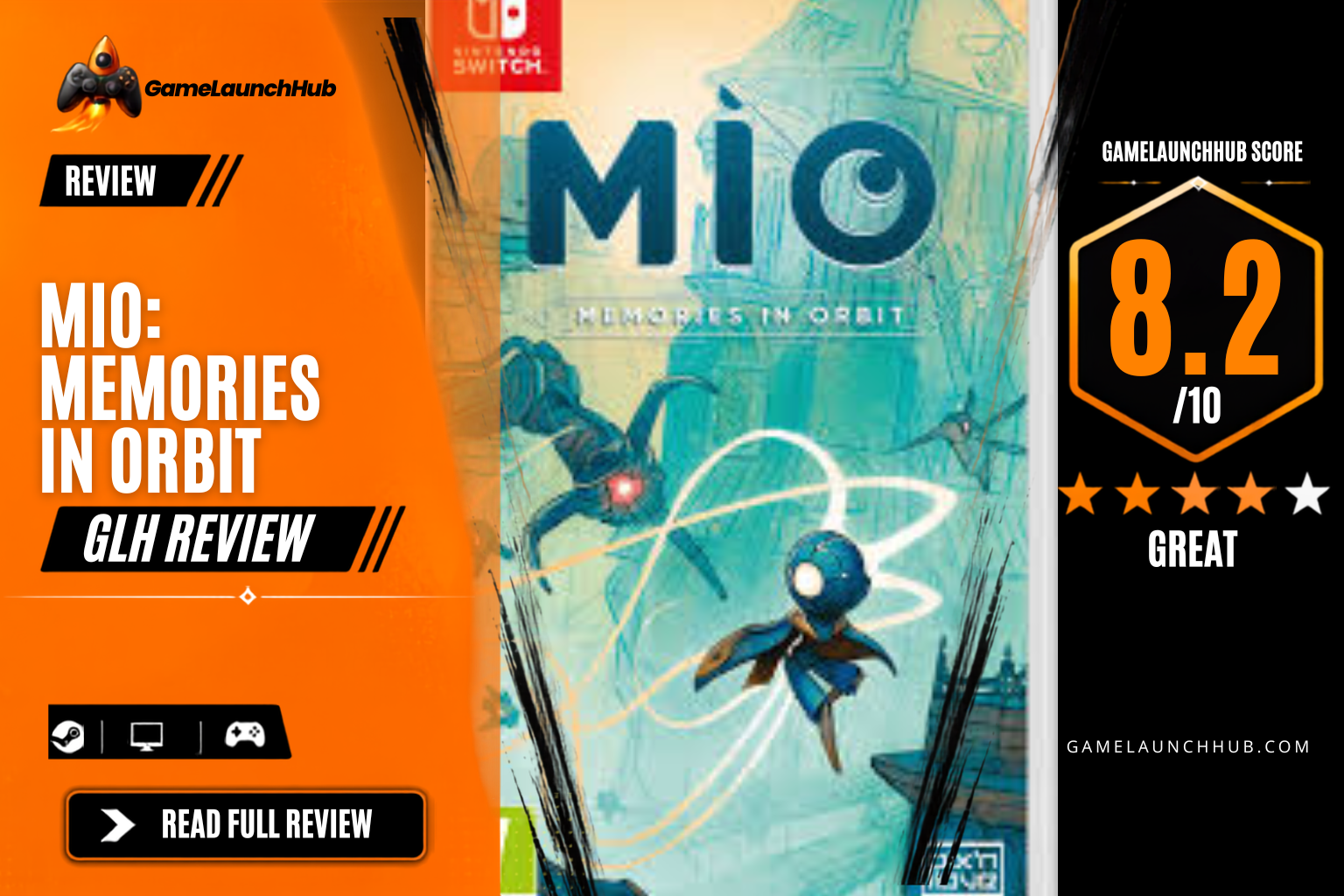

Mio: Memories in Orbit: Is It Worth It? Our Honest Verdict
Introduction
Some games invite you in with a gentle hand; others grab you by the collar and dare you to keep up. Mio: Memories in Orbit does neither, it simply places you in a world so exquisitely realized that you cannot help but want to explore every last corner of it. Developed by the small French studio Douze Dixièmes and published by Focus Entertainment, this Metroidvania arrived on January 20, 2026, for PC, PlayStation 5, Xbox Series X|S, and Nintendo Switch 1 & 2. It arrived with a Metacritic score of 84 on PC, a raft of glowing reviews, and the weight of expectation that comes with being called “2026’s first major banger.”
You play as MIO, a nimble android who awakens aboard the Vessel, a vast, drifting technological ark overgrown with rogue machines and decaying infrastructure. The ship’s AI caretakers, the Pearls, have ceased functioning, and the Vessel faces imminent shutdown. Your mission: explore its labyrinthine depths, recover its lost memories, and uncover the truth about your own forgotten past. We have spent hours swinging through its haunting corridors, dying to its punishing bosses, and piecing together its melancholic narrative. So, after all that, we have to ask: is Mio: Memories in Orbit worth your time and credits? Let’s break it down.
Quick Verdict Box
TL;DR: Mio: Memories in Orbit is a visually stunning, emotionally resonant Metroidvania that delivers tight platforming, punishing boss fights, and a beautifully melancholic world to explore. Its combat and movement feel fantastic, and its art direction is nothing short of breathtaking. However, its standard-issue Metroidvania structure and some frustrating late-game platforming keep it from reaching the heights of the genre’s absolute best.
Buy it if:
- You love Metroidvanias with tight, precision-based platforming and challenging combat
- You appreciate breathtaking hand-drawn art direction and a haunting lo-fi soundtrack
- You enjoy atmospheric, melancholic storytelling that unfolds through exploration
Skip it if:
- You are tired of the standard Metroidvania formula with few surprises
- Frustrating late-game platforming sequences sound like a chore
- You prefer games with deep, evolving combat systems over simple but solid mechanics
What Is Mio: Memories in Orbit?
| Detail | Information |
|---|---|
| Developer | Douze Dixièmes |
| Publisher | Focus Entertainment |
| Genre | Metroidvania / Action-Platformer |
| Platforms | PC (Steam), PS5, Xbox Series X|S, Nintendo Switch 1 & 2 |
| Price | $19.99 / €19.99 (10% launch discount available) |
| Release Date | January 20, 2026 |
Mio: Memories in Orbit is a 2.5D Metroidvania action-platformer set aboard the Vessel, a colossal spaceship drifting through space. You play as MIO, a small android with grappling-hook “hair” that serves as both a traversal tool and a weapon. The game is inspired by the works of Hayao Miyazaki, the French animated film Ernest & Celestine, and the sci-fi novel series Hyperion. It features over 30 enemy types, 15 bosses, and a mod system that allows you to customize MIO’s abilities. It is available on all major platforms and is also a day-one title on Xbox Game Pass. You can also purchase it on the Microsoft Store.
Gameplay & Mechanics
Movement and Platforming: The Game’s True Heart
The moment you take control of MIO, you feel the difference. Movement is silky-smooth, precise, and deeply satisfying. You have a double jump that looks like an elegant mid-air pirouette, a hookshot that can be used for both traversal and combat, and an instantaneous dodge move that feels almost as satisfying as a Sekiro parry. The game’s multi-tool gameplay combines platforming and combat “in an ongoing, empowering flow.”
What sets MIO’s movement apart is the energy system. Your grappling abilities require energy, which you recharge by touching the ground or hitting special flowers scattered throughout the environment. This creates exhilarating sequences where you swing from grapple point to grapple point, hitting flowers midair to recharge, and swinging further in a rhythm that feels almost musical. Later, you unlock a glide ability that uses the same energy, adding another layer to the traversal puzzle.
Combat: Solid but Simple
Combat is functional and satisfying but never reaches the heights of the genre’s best. You have a basic combo string, a hook that can pull you towards enemies or pull them towards you, and the ability to create decoy clones. The game encourages aerial combat; striking any enemy in the air will reset your double jump, allowing for extended mid-air combos.
The bosses are where combat shines. They are “stylistically distinct,” each demanding you learn how to best use MIO’s movement tech to navigate their hazards and capitalize on attack windows. However, the boss arenas themselves can feel samey, mostly square rooms with a few grapple points. As one review noted, “most of the fights hit a lot of the same notes.”
The Mod System: Customisation with a Cost
The game features a mod system with 35 modifiers that grant new abilities, plus seven “special modifiers” that offer advantages but also have downsides. These fill slots in an allocation matrix, encouraging you to make deliberate choices about your build depending on the area or boss you are tackling. It adds a layer of strategy but is not revolutionary.
The Grind: Death and Currency
On death, you lose all your standard currency, a harsh punishment that initially feels frustrating. However, that currency is automatically funnelled into useful upgrades, even if you do not know it at the time. You can also find particular spots to save up for other accessories and weapons. It is a system that feels punishing at first but ultimately works in your favor.
Story & Presentation
Narrative: A Beautiful, Melancholic Mystery
The story is told subtly, through environmental storytelling, fragments of dialogue, and a recurring 2D wireframe narrative that unfurls as you progress. The vessel was designed to transport humans to a place called the Promised Land, but all the humans are gone, dead or missing. Only the machines remain, and many have given up hope.
What makes the narrative so effective is its intimacy. The story is not about saving the world; it is about reclaiming memories, about finding meaning in a world that has already ended. As one review put it, “the writing is simple, succinct, and often beautiful.” Another noted that “as a story, as a world, MIO sings.”
Visuals: Hand-Drawn Perfection
Visually, Mio: Memories in Orbit is a masterpiece. The characters and environments are fully hand-drawn before being rendered in 3D, resulting in a world that feels like a moving painting. The vessel is a “tangle of ruins, overgrown corridors, broken machinery, and rogue robots lurking in the shadows. ” Each area is distinct, from lush, deadly jungles with strong purple hues to azure metropolises that appear to have frozen over. The use of light and shadow is particularly effective, with darkness always serving a purpose. It is “one of the best-looking games of 2026,” and its “visual design is without equal” in the genre.
Audio: A Haunting Lo-Fi Soundtrack
The soundtrack, composed by Nicolas Guéguen, is a perfect complement to the visuals. It blends lo-fi beats and choral melodies, creating a soundscape that is “beautiful, with subtle lofi tones that add a calming layer to the ship. ” The music is “not flashy or over-the-top, but it’s beautiful,” letting the soundtrack breathe without forcing emotions on the player. The Mio: Memories in Orbit Original Soundtrack is available on Spotify, Apple Music, YouTube, and Bandcamp.
Performance & Technical
The game runs flawlessly on all platforms. On Nintendo Switch 2, it boasts a “flawless technical performance” and “fine-tuned controls” that always feel right. The game is also fully playable on Steam Deck and is a day-one title on Xbox Game Pass.
One notable point: owners of the Nintendo Switch 1 version receive free access to the Nintendo Switch 2 version. It is a generous move that ensures the game looks and performs its best on the new hardware.
Pros and Cons
Pros
| ✅ | Breathtaking hand-drawn visuals with a unique, painterly art style |
| ✅ | Silky-smooth movement and platforming with a satisfying grappling system |
| ✅ | Beautiful, melancholic soundtrack that perfectly complements the atmosphere |
| ✅ | Challenging but fair boss fights that reward skill and pattern recognition |
| ✅ | Intimate, emotionally resonant storytelling told through environmental cues |
| ✅ | Generous upgrade policy, free Switch 2 upgrade for existing owners |
Cons
| ❌ | Standard-issue Metroidvania structure that rarely surprises |
| ❌ | Combat is solid but shallow, with little evolution over the game’s runtime |
| ❌ | Frustrating late-game platforming that feels like “long Simon Says gauntlets” |
| ❌ | Boss arenas can feel samey, with most being square rooms with grapple points |
| ❌ | Punishing death system that may frustrate less patient players |
How It Compares
| Game | Price | Key Features | Difficulty |
|---|---|---|---|
| Mio: Memories in Orbit | $19.99 | Hand-drawn visuals; grappling-based movement; mod system | High |
| Hollow Knight | $14.99 | Vast interconnected world; tight combat; atmospheric storytelling | Very High |
| Ori and the Will of the Wisps | $29.99 | Fluid platforming; emotional story; beautiful visuals | Moderate |
Mio: Memories in Orbit sits comfortably alongside the greats of the genre. It is inspired by Hollow Knight and Ori, but it carves its own path with its grappling-based movement and energy system. Compared to Hollow Knight, it is a shorter, more focused experience with less sprawling exploration but equally punishing bosses. Compared to Ori, it is a darker, more melancholic tale with less fluid platforming but a more distinctive visual identity. At $19.99, it offers excellent value, especially for fans of the genre.
Who Should Buy This?
For Metroidvania fans: This is an easy recommendation. It ticks all the right boxes, precise platforming, challenging enemies, exploration, and new abilities that open up the map. It is “one of those hidden gems that deserves to be unearthed.”
For players who appreciate hand-drawn art and atmosphere: The visuals are breathtaking, and the world is rich with detail. If you value art direction above all else, this is a must-play.
For players looking for a challenging, focused experience: The game is punishing but fair. Bosses will make you work for your victory, and the platforming demands precision.
For players tired of the standard Metroidvania formula: The game is a “bog-standard Metroidvania.” It does little to reinvent the genre, and if you are looking for innovation, you may be disappointed.
For players with a low tolerance for frustrating platforming: The late-game platforming can be brutal. As one review put it, it is “just long Simon Says gauntlets. “If this sounds like a chore, you may want to look elsewhere.
THE GLH RATING
Our Take: After spending hours swinging through the haunting corridors of the Vessel, dying to its punishing bosses, and piecing together its melancholic narrative, we came away deeply impressed, but not entirely surprised. Mio: Memories in Orbit is a game that knows exactly what it wants to be: a beautiful, challenging, emotionally resonant Metroidvania that wears its influences on its sleeve. The movement is silky-smooth, the art direction is breathtaking, and the soundtrack is hauntingly beautiful. But it is also a game that is content to play within the genre’s established boundaries, rarely pushing beyond them. It is a “stunning Metroidvania,” but it is not a revolutionary one. For fans of the genre, it is an easy recommendation. For everyone else, it is a beautiful but familiar experience.
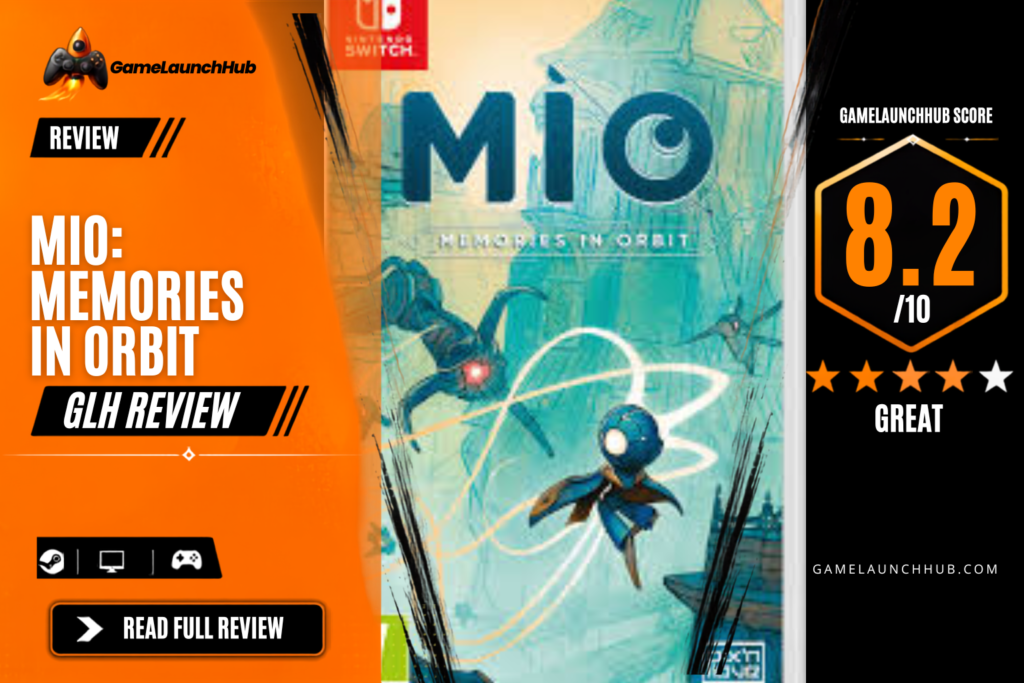
Overall Score: 8.2 / 10
★★★★☆
Verdict: GREAT
| Category | Score |
|---|---|
| Gameplay | 8.0 / 10 |
| Story & Presentation | 9.0 / 10 |
| Performance & Polish | 8.5 / 10 |
| Value for Money | 8.5 / 10 |
| Replayability | 7.0 / 10 |
FAQ
Is Mio: Memories in Orbit worth buying?
Yes, if you are a fan of Metroidvanias. The game has an 84 Metascore on PC and an 83% recommendation rate on OpenCritic. It is a beautiful, challenging, and emotionally resonant experience that is well worth the $19.99 price tag. However, if you are tired of the standard Metroidvania formula, you may find it familiar.
Is Mio: Memories in Orbit worth it on Switch 2?
Yes. The Switch 2 version offers a “flawless technical performance” and “fine-tuned controls.” Existing Switch 1 owners also receive the Switch 2 version for free, making it an even better value proposition.
How long to beat Mio: Memories in Orbit?
The developers estimate around 20 hours for a standard playthrough, with more time if you explore thoroughly. The game is a focused, manageable experience that does not overstay its welcome.
Is Mio: Memories in Orbit worth full price?
At $19.99, the game offers excellent value for the quality and length of the experience. The 10% launch discount on Steam and Xbox makes it an even better deal. If you are a Game Pass subscriber, you can play it at no additional cost.
Is Mio: Memories in Orbit a difficult game?
Yes. The game is challenging, with some bosses requiring 40-50 attempts. However, the game includes accessibility options such as an “eroded bosses” option that makes them take slightly more damage each time you die, with a cap of double damage.
Is Mio: Memories in Orbit a good game for beginners to the genre?
The game is accessible but punishing. If you are new to Metroidvanias, the difficulty may be overwhelming. However, the game’s options allow you to adjust the challenge, making it more approachable.
Does Mio: Memories in Orbit have a physical release?
As of now, there has been no announcement of a physical release. The game is available digitally on all platforms.
Conclusion
Mio: Memories in Orbit is a game that wears its heart on its sleeve. It is a love letter to the Metroidvania genre, a tribute to the works of Hayao Miyazaki, and a testament to the talent of a small French studio that punched well above its weight. Its world is breathtakingly beautiful, its movement is silky-smooth, and its narrative is quietly devastating. It is a game that will stay with you long after the credits roll.
But it is also a game that is content to play within the genre’s established boundaries. It does little to reinvent the Metroidvania formula, and its combat, while solid, never quite reaches the heights of its inspirations. It is a “stunning Metroidvania,” but it is not a revolutionary one.
For fans of the genre, Mio: Memories in Orbit is an easy recommendation, a beautiful, challenging, and emotionally resonant experience that deserves a place in your library. For everyone else, it is a beautiful but familiar journey into a world that is well worth exploring.
Final recommendation: Buy it if you love Metroidvanias and beautiful hand-drawn art. It is a gem.
Read Also: DragonSword Review: The Gacha-Free Open World RPG
One response to “Mio: Memories in Orbit Review: Breathtaking Sci-Fi”
[…] Mio: Memories in Orbit Review: Breathtaking Sci-FiAugust 21, 2026 […]