






![Promotional banner for the article "Kingdom Hearts Collection [I~III] Release Date 2026: The Complete Saga Finally Comes to Modern Consoles" by GameLaunchHub, featuring the game's official logo, a collage of Sora, Donald, and Goofy alongside classic worlds, and a solid orange sidebar on the left.](https://gamelaunchhub.co.uk/wp-content/uploads/2026/10/GameLaunchHub-Esports-Featureanalysis-7-150x150.png)

Fairy Tail: Dungeons: Is It Worth It? Our Honest Verdict
Introduction
Fairy Tail is one of the biggest anime and manga franchises that doesn’t orbit the Shonen Jump banner, and its video game adaptations have been a mixed bag over the years. But something interesting happened in 2024. Rather than another big-budget RPG, IP holder Kodansha propped up a trio of indie developers to release smaller, passion-driven projects using creator Hiro Mashima’s world and characters. Fairy Tail: Dungeons is the first of that set.
Developed by solo creator ginolabo (of Soul Vars fame), this is a deck-building roguelite that dropped on Steam in August 2024 before making its way to Nintendo Switch in January 2026. It’s a “dessert game,” as one Steam curator put it, a small, sweet treat rather than a full meal. But sometimes, that’s exactly what you need. We’ve spent hours diving into its mysterious labyrinth, building decks, and getting utterly destroyed by its bosses. So, after all that, we have to ask: is Fairy Tail: Dungeons worth your time and credits? Let’s break it down.
Quick Verdict Box
TL;DR: Fairy Tail: Dungeons is a charming, accessible deck-building roguelite that captures the boisterous spirit of the Fairy Tail series in a compact package. The card combat is quick and surprisingly tactical, the pixel art is sharp and colorful, and the price point is hard to argue with. However, the story is paper-thin, the dungeon design is repetitive, and it lacks the depth to become a long-term obsession.
Buy it if:
- You’re a Fairy Tail fan looking for a fun, bite-sized adventure
- You enjoy deck-building roguelites but want something more accessible than Slay the Spire
- You’re looking for a quick, pick-up-and-play game for short sessions
Skip it if:
- You’re expecting a deep, story-driven RPG with hours of character development
- You’re a roguelite veteran looking for the next genre-defining experience
- You dislike repetitive dungeon designs and limited enemy variety
What Is Fairy Tail: Dungeons?
| Detail | Information |
|---|---|
| Developer | ginolabo |
| Publisher | Kodansha |
| Genre | Deck-Building Roguelite / Strategy |
| Platforms | PC (Steam), Nintendo Switch |
| Price | $13.99 / £12.49 / €13.99 (Switch); $14.00 (Steam) |
| Release Date | August 26, 2024 (PC); January 7, 2026 (Switch) |
Fairy Tail: Dungeons is a deck-building roguelite set in the world of Hiro Mashima’s beloved anime and manga series. You control Fairy Tail characters exploring a mysterious dungeon using a limited number of moves and a strategically built deck of skill cards to take down foes as they make for the deepest depths. The game originally launched on Steam in August 2024 and received a Nintendo Switch release on January 7, 2026, alongside a major content update. It supports English, Japanese, Simplified Chinese, Traditional Chinese, Korean, French, and Thai.
Gameplay & Mechanics
Card Combat: Quick, Snappy, and Surprisingly Tactical
The heart of Fairy Tail: Dungeons is its card-based combat, and it’s genuinely engaging. You start each round with a hand of four cards drawn from your deck. You have three MP to spend each turn, and each card costs one or two MP. The twist? Enemies telegraph their moves. The game shows you damage numbers above enemies if they’re going to attack, and you can inspect them to see what buffs or defensive spells they’re casting. Some enemies even prepare highly damaging attacks that require specific counters, like playing a certain number of attack cards.
This creates a satisfying puzzle. You’ll agonize over whether to bulk up your defenses, try to kill an enemy before it hits you, or play the right cards to stop an incoming big hit. And because your health persists across the dungeon, mistakes pile up. Take too much damage and you’re back to the start. It’s simple enough to pick up in seconds, but there’s real depth in knowing when to push and when to play it safe.
Magic Chains: The Secret Sauce
The game’s standout mechanic is Magic Chains. By playing cards in a specific order, you can activate powerful chain attacks that deal punishing amounts of damage. This adds a layer of strategy to deck-building that goes beyond just having the strongest cards. As one review noted, “The card synergies themselves are intuitive translations of these powers and personalities, making each character fun to play around with.”
Characters and Skill Trees
Each Fairy Tail character plays differently. Natsu is all about big damage. Gray is much more defensive. Erza’s deck transforms with myriad side effects. Lucy calls on her celestial spirits. There’s a solid roster of playable characters to unlock, each with unique fighting styles and fortes.
You also have a skill tree that rearranges itself every run. You choose where to spend your initial points, then react to what gets opened up as you progress. It keeps you on your toes, forcing you to adapt rather than relying on a single optimal build.
The Dungeon Crawl: Fun but Repetitive
You explore dungeons within a limited number of steps. You’ll find treasure chests, battle enemies, and occasionally run into fellow guild members who can join your party. The solo dungeon experience is the core of the game. But the dungeon design itself is fairly simple and repetitive. You’ll see the same environments and enemy types over and over, which limits the sense of discovery.
Story & Presentation
Narrative: A Boilerplate Excuse for the Gang to Get Together
Let’s be honest: the story isn’t why you’re here. One day, Natsu and Happy discover a mysterious door has appeared below the guild. Inside, they find a strange, expansive dungeon that saps intruders of their powers. They’re saved by an Exceed called Labi and decide to help find Labi’s missing friend by heading to the deepest depths.
That’s it. That’s the plot. As one review put it, “The scenario is a fairly boilerplate excuse to get the gang together.” The narrative space “simply feels empty, barren, and devoid of personality.” It doesn’t go into any character development, and encounters with previous evildoers lack any real weight. But here’s the thing: this is a $14 roguelite, not a $60 RPG. The game assumes you know who these characters are, and it delivers exactly what you’d expect: fun character interactions and the boisterous vibes of Fairy Tail in a small space.
Visuals: Sharp, Colourful Pixel Art
The pixel art is sharp and colorful, and the series’ personality shines from every angle. The sprite-based character designs really stand out, especially on the Switch screen. The game has a clean, polished look that captures the essence of the anime without trying to be a high-budget 3D production. It’s charming and effective.
Audio: Secret of Mana Composer on the Flute
The soundtrack comes from none other than Hiroki Kikuta, the composer of Secret of Mana. The adventurous flute-driven soundtrack is a delight, perfectly capturing the adventurous tone of the series. However, the music can get repetitive over long sessions. The game has no voice acting, which is a missed opportunity given how expressive these characters are.
Performance & Technical
The game runs flawlessly on both PC and Switch. On Switch, “the sprite-based character designs really stand out on the screen and become the focus. ” Load times are quick, and we encountered no significant bugs during our playthrough.
The major content update that launched alongside the Switch version added new characters, cards, and more. The developers have been actively supporting the game, which is always a good sign.
Pros and Cons
Pros
| ✅ | Quick, snappy card combat that’s easy to learn but hard to master |
| ✅ | Magic Chains system adds satisfying depth to deck-building |
| ✅ | Distinct character playstyles that encourage experimentation |
| ✅ | Sharp, colourful pixel art that captures the Fairy Tail vibe |
| ✅ | Soundtrack from Secret of Mana composer Hiroki Kikuta |
| ✅ | Accessible price point and perfect for short play sessions |
Cons
| ❌ | Paper-thin story with minimal character development |
| ❌ | Repetitive dungeon design and limited enemy variety |
| ❌ | Lacks the depth to become a long-term obsession |
| ❌ | No voice acting in a series known for expressive characters |
| ❌ | Not particularly challenging for roguelite veterans |
How It Compares
| Game | Price | Key Feature | Depth |
|---|---|---|---|
| Fairy Tail: Dungeons | $13.99 | Fairy Tail IP; accessible deck-building | Light |
| Slay the Spire | $24.99 | Genre-defining depth; endless replayability | Deep |
| Monster Train | $24.99 | Strategic depth; unique faction mechanics | Deep |
Fairy Tail: Dungeons is no Slay the Spire. But as one review noted, “In some ways that’s a good thing. It provides an easier-to-grasp experience that provides a fun dungeon romp for fans and non-fans alike.” It’s a more accessible entry point into the genre, perfect for players who find Slay the Spire intimidating or for Fairy Tail fans looking for a low-commitment way to spend time with their favorite characters. It lacks the teeth and depth of its genre peers, but it makes up for it with charm and personality.
Who Should Buy This?
For Fairy Tail fans: This is an easy recommendation. The game captures the boisterous spirit of the series, and each character’s deck reflects their personality perfectly. It’s a fun way to revisit the series in small, satisfying portions.
For casual roguelite players: If you’ve been curious about deck-building roguelites but found Slay the Spire too punishing, this is a great entry point. It’s accessible, forgiving, and quick to play.
For players looking for quick, pick-up-and-play sessions: With 5-hour main story runs and the ability to play a few quick hands in a fight, this is perfect for busy schedules.
For roguelite veterans: You may find this too shallow. There are plenty of games in the genre that do what Fairy Tail: Dungeons does, but better and with more depth.
For players seeking a deep story: Skip it. The narrative is minimal, and the game assumes you already know and love these characters.
THE GLH RATING
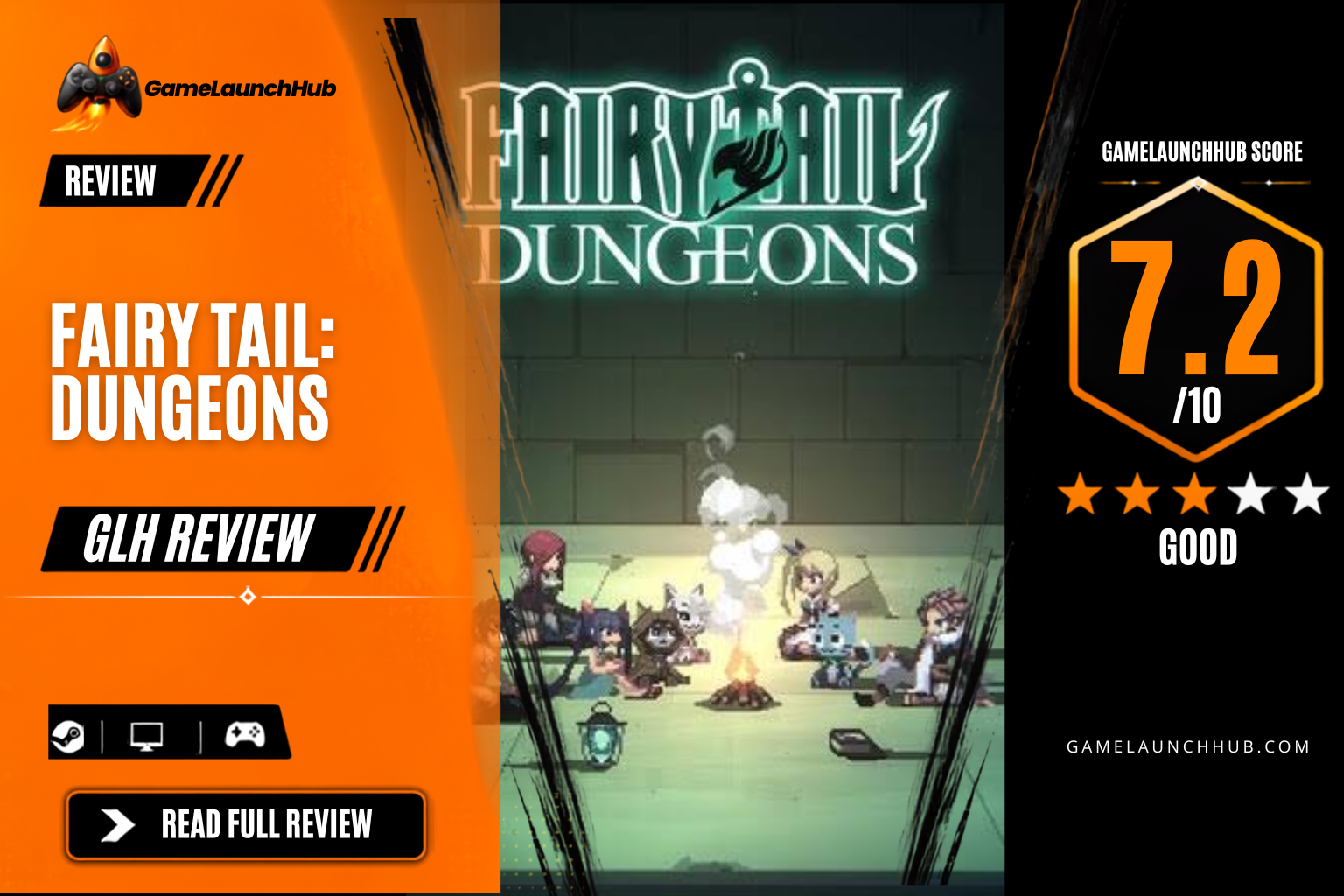
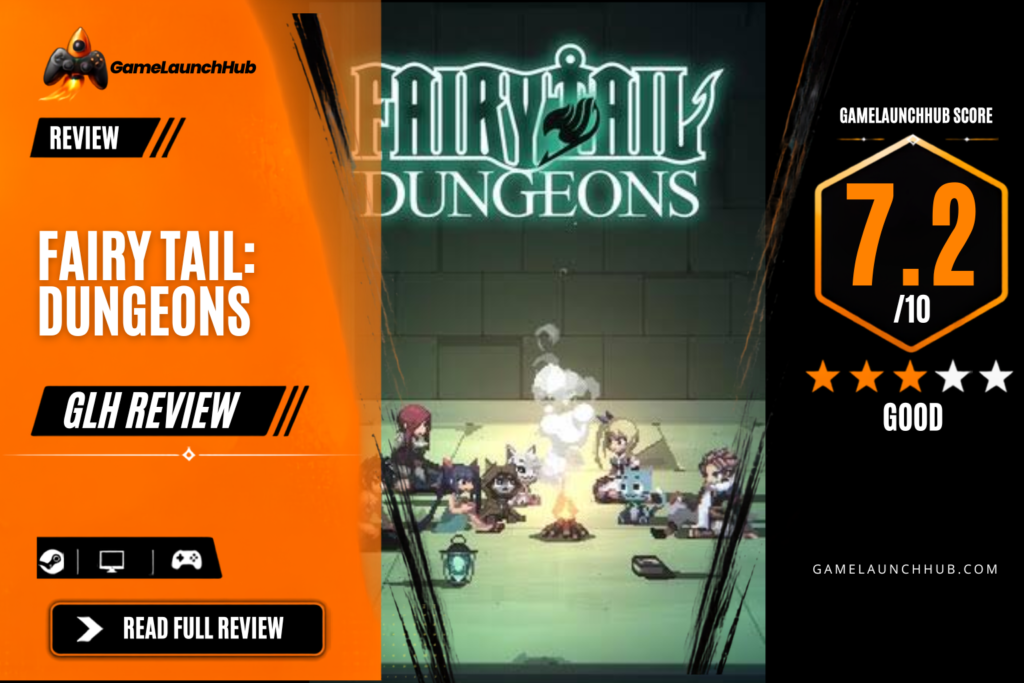
Our Take: After spending hours building decks, activating Magic Chains, and getting flattened by dungeon bosses, we came away charmed but not obsessed. Fairy Tail: Dungeons is exactly what it sets out to be: a small, accessible, and surprisingly tactical deck-building roguelite that wears its Fairy Tail heart on its sleeve. The card combat is genuinely fun, the Magic Chains system adds satisfying depth, and the pixel art is a treat. But the paper-thin story, repetitive dungeon design, and lack of genre-defining depth mean it’s unlikely to become your next 100-hour obsession. For $14, it’s a delightful little adventure that knows exactly what it is and doesn’t try to be anything more.
Overall Score: 7.2 / 10
★★★☆☆
Verdict: GOOD
| Category | Score |
|---|---|
| Gameplay | 7.5 / 10 |
| Story & Presentation | 6.5 / 10 |
| Performance & Polish | 8.0 / 10 |
| Value for Money | 8.0 / 10 |
| Replayability | 6.5 / 10 |
FAQ
Is Fairy Tail: Dungeons worth buying?
Yes, if you’re a Fairy Tail fan or a casual roguelite player looking for an accessible entry point. The card combat is quick and tactical, the price is right, and the Fairy Tail charm is undeniable. The game has a Metacritic score of 79 and an OpenCritic score of 80, with 92% positive user reviews on Steam.
Is Fairy Tail: Dungeons worth it on Switch?
Absolutely. The Switch port runs flawlessly, and the sprite-based art really pops on the screen. The major content update that launched alongside the Switch version adds new characters and cards. It’s arguably the definitive way to play.
How long to beat Fairy Tail: Dungeons?
The main story takes around 5 hours to complete. If you’re going for extras and unlocking all characters, expect around 7.5 hours.
Is Fairy Tail: Dungeons worth full price?
At $13.99, the game offers excellent value for the 5-7 hour experience. The price point is accessible, and the content justifies the cost. If you’re a Fairy Tail fan, it’s a no-brainer.
Do I need to know Fairy Tail to enjoy this game?
Not really. The game provides a fast introduction to the characters, and the story is light enough that you won’t feel lost. However, fans will get significantly more out of the experience, as the game assumes you already know who these characters are.
Is Fairy Tail: Dungeons difficult?
The game presents a good balance of challenge. It’s not excessively difficult, but it’s not too easy either. Roguelite veterans may find it relatively easy, while newcomers to the genre will find it approachable.
Does Fairy Tail: Dungeons have voice acting?
No. The game has no voice acting, which is a bit disappointing given how expressive the Fairy Tail characters are. The soundtrack, composed by Secret of Mana‘s Hiroki Kikuta, more than makes up for it.
Conclusion
Fairy Tail: Dungeons is a delightful little game that knows exactly what it is and doesn’t pretend to be anything more. It’s a small, accessible deck-building roguelite that captures the boisterous spirit of Fairy Tail in a compact package. The card combat is quick and surprisingly tactical, the Magic Chains system adds satisfying depth, and the pixel art is a treat for the eyes. The soundtrack from Secret of Mana composer Hiroki Kikuta is the cherry on top.
But it’s also a game that lacks the depth to become a long-term obsession. The story is paper-thin, the dungeon design is repetitive, and roguelite veterans will find it lacking compared to genre titans like Slay the Spire. It’s a “dessert game,” sweet, satisfying, and over before you know it.
If you’re a Fairy Tail fan looking for a fun, bite-sized adventure or a casual player curious about deck-building roguelites, Fairy Tail: Dungeons is an easy recommendation. Just don’t expect it to replace your 100-hour roguelite obsession.
Final recommendation: Buy it if you’re a Fairy Tail fan or want an accessible entry into the roguelite genre. It’s a small but satisfying adventure at a price that’s hard to argue with.
Read More: I Am Future Review: Is This Cozy Survival Worth It?